



| Type | Description | Contributor | Date |
|---|---|---|---|
 | Post created | Pocketful Team | Apr-20-26 |
Read Next
- Delta in Options: Meaning, Formula, Uses & Examples
- What is Commodity Pool Operator (CPO)?
- Best Penny Stock Trading Platforms, Brokers & Apps
- Bid Price and Ask Price: Key Differences
- What is After Hours Trading: Definition, Benefits & Risks
- Minimum Capital Required for Options Trading in India
- Trading Terminal: Meaning, Features, Types & Benefits
- MTF Charges vs Normal Trading Charges: Key Differences
- Slippage in Trading: Meaning, Types, Causes & How to Reduce It
- Types of Stock Market Orders Explained
- What Is Cash Trading? Meaning, How It Works & Benefits
- What is Max Pain Theory?
- What is Averaging Up in Stock Trading?
- What Is an After Market Order (AMO)? Meaning, Timing & How It Works
- How to Reduce Risk in Options Trading: 10 Tips
- What is Speculative Trading in Stock Market?
- What is Pair Trading?
- What is Quoted Price in Commodity Trading?
- Best Strategies to Trade from Charts
- How To Use Directional Movement Index In Trading?
Can You Lose More Than You Invest with Margin Trading?
Published on : 24th April 2026
|Updated on : 7th August 2026



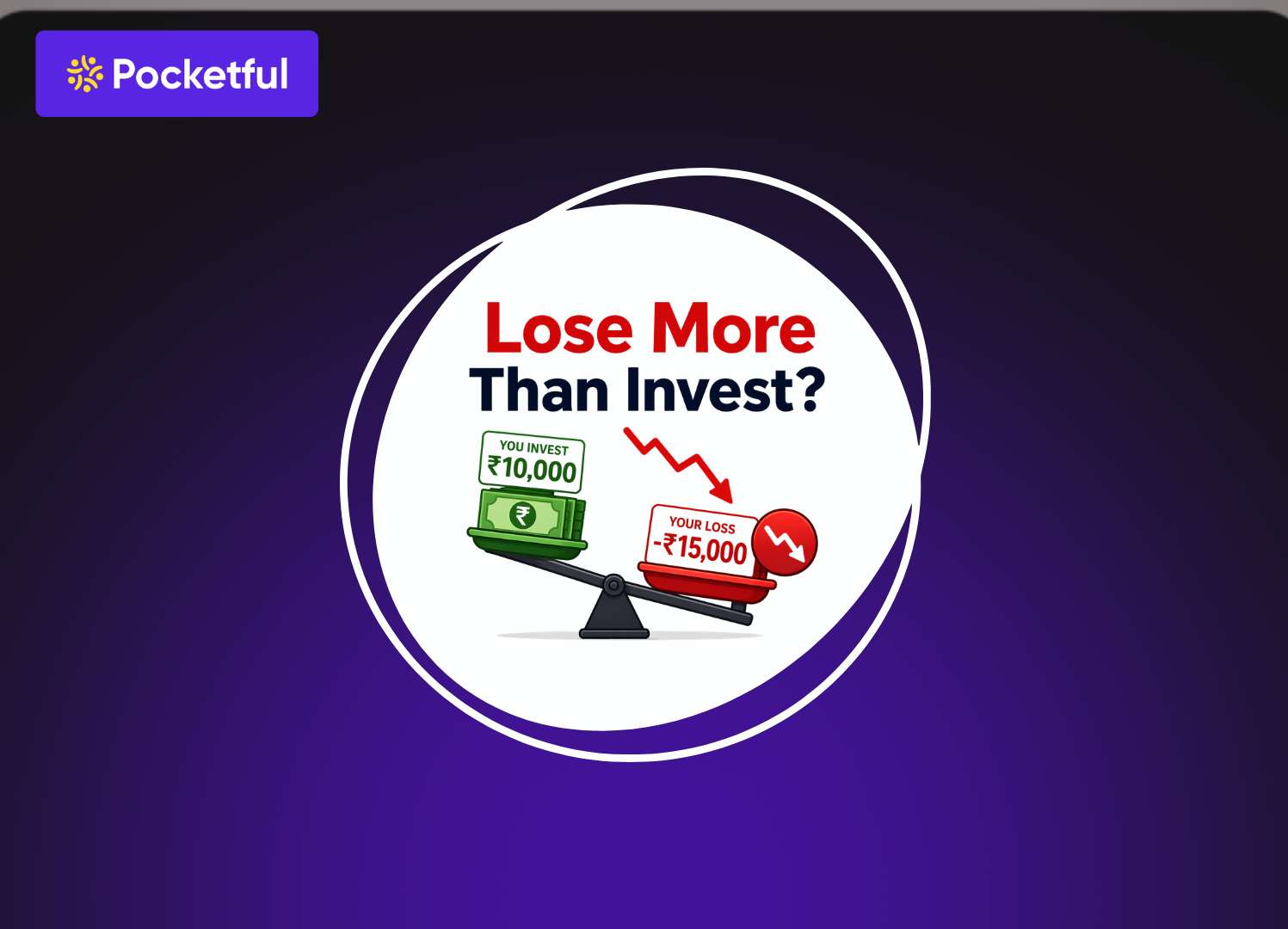
In today’s stock market, various investors and traders use the margin trading facility provided by their stockbrokers. But during market fluctuations, they always worry about losing more than they have invested through the margin trading facility.
In today’s blog post, we will explain to you how you can lose more than you invested with MTF.
What is Margin Trading Facility?
Margin trading facility offered by the broker that allows you to purchase stocks by paying only a limited amount upfront; the remaining amount will be paid by the broker, and for this, they will charge a certain interest to you. Using a margin trading facility increases the potential return, but it also comes with certain risks; one is required to use it within limits and follow proper risk management.
Key Features of Margin Trading Facility
The key features of the margin training facility are as follows:
- High Purchasing Power: Using the margin trading facility increases the purchasing power of an individual. They can now purchase more shares with the limited capital available.
- Increased Profit: With the rise in purchasing power, their profits have also increased. They can make a larger position and increase their market exposure.
- Interest: The broker will charge a certain interest rate on it, which eventually increases the cost and decreases the net profit. The interest is charged on a daily basis.
- Approved Stocks: Not all stocks are eligible for the margin trading facility; the exchange has approved certain stocks on which the broker may offer margin.
How can you lose more than you invested?
Let’s see how you can lose more than you invested using the margin trading facility.
Suppose you have INR 50,000 capital and are using the margin trading facility.
There is a stock named XYZ Limited, trading at INR 1500.
You purchased 100 shares of XYZ Limited.
Now, your total purchase value will be 1500 per share * 100 share quantity = 1,50,000 INR.
You have invested 50,000, and your broker funded you with 1,00,000 INR
Now, let’s suppose that the quarter results of the company are not in line with expectations and the stock falls by 40%.
Then the total loss will be around 40% of the invested amount, which is 1,50,000 and which comes around 60,000.
As you have invested only 50,000 and the loss is 60,000, your entire capital is at a loss, and you will have to pay an additional 10,000 to your broker.
However, generally it does not happen because the broker will monitor your position on a real-time basis, and whenever the margin falls below the threshold, they will ask you to pay additional margin or pledge securities held in your account, and if you fail to do so, your position will automatically be squared off by the broker.
Use our Margin Trading Facility Calculator
Why losses can exceed your investment
There are various reasons why losses can exceed your investment; a few of these reasons are as follows:
- High Exposure: Using leverage allows you to have higher exposure with a limited amount of money. Therefore, a small decrease in the stock price can significantly increase your risk.
- Market Volatility: Markets are highly volatile in nature; they sometimes crash due to bad news, which can increase your losses before you get a chance to react.
- Late Margin Calls: Due to sudden market movement, the brokers will ask for funds and securities. If you are unable to add them in time, it will lead to a loss.
- Interest Cost: If the market moves in a consolidated manner, you might need to hold your position for a longer period of time, which will accumulate interest and increase its cost.
Read Also: Is Margin Trading Facility (MTF) Safe in India?
Key Risk of Using Leverage
The key risk of using leverage is as follows:
- Increase Risk: Leverage increases your market exposure; therefore, any small change in the price of the stock can amplify your loss.
- Forced Square Off: If an investor fails to meet the minimum margin requirement, then the broker can automatically square off the investor’s position.
- Interest Cost: As MTF is involved in borrowing funds from the broker, the longer you hold your position, the higher the interest cost needs to be paid.
How to Manage the Risk of Using Leverage?
To manage the risk of using leverage, one can follow the steps mentioned below:
- Use Limited Leverage: Instead of using the maximum limit of leverage offered by the broker, one should use limited leverage and reduce the impact of market fluctuations.
- Stoploss: Before entering any trade, one should place a stoploss based on one’s risk profile. This ensures that losses are under control.
- Avoid Volatile Stocks: To manage the risk, one should opt for investing only in low-volatility stocks.
Who Should Use Margin Trading Facility
Margin trading facility should be used by the traders who have a better understanding of the stock market. Margin trading facility requires active monitoring of stocks so that forced margin calls can be avoided. MTF can only be used by short-term traders, as in the long term, its interest cost will increase. Therefore, investors who can take higher risks for higher returns can consider investing through a margin trading facility.
Read Also: How to Activate MTF on Pocketful?
Conclusion
On a concluding note, the margin trading facility is a powerful tool for traders to enhance their returns with limited capital. As it can increase your profit, but along with this, it can also amplify your loss. Along with the higher returns, it also comes with higher risk, such as forced square-off, margin calls, interest cost, etc. Therefore, one should use the margin trading facility in a disciplined manner and keep a strict stop loss. Download Pocketful – India’s Lowest MTF, Free Delivery, Zero AMC & Easy-to-Use App Also, it is advisable to consult your investment advisor before making any investments using the margin trading facility.
Frequently Asked Questions (FAQs)
01
Can I lose more than I invested in the Margin Trading Facility?
Yes, it is possible, as losses are calculated on the total position or investment value, not on the amount you invested.
02
As a beginner, is it safe to invest using MTF?
No, as a beginner, it is not advisable to invest in stocks using MTF, as it carries high risk.
03
Do I have to pay any interest on using MTF?
Yes, you will have to pay interest on using MTF. The interest rate charged by the brokers can vary from broker to broker.
04
Is there a minimum time period to hold MTF positions?
No, there is no minimum time period to hold the MTF positions. One can use MTF for a few days to a few weeks, depending on their need.
05
Is MTF available for all trading accounts?
No, MTF is not available by default for all trading accounts. One is required to get it activated by contacting their broker and agreeing to their terms and conditions.
Disclaimer

The information shared in this content is intended solely for educational and informational purposes and should not be considered financial, investment, or trading advice. Any references to stocks, mutual funds, or market instruments are purely for informational purposes and do not constitute recommendations. Investments in financial markets are subject to market risks, and past performance is not indicative of future returns. Readers are advised to conduct independent research, review official documents carefully, and consult a qualified financial advisor before making any investment or trading decisions.
Article History