


| Type | Description | Contributor | Date |
|---|---|---|---|
 | Post created | Pocketful Team | Oct-07-26 |
Read Next
- Is ₹2000 Note Still Valid in India in 2026?
- Best Stock Market YouTube Channels in India for Beginners
- SEBI Action on Jane Street: Impact on Indian Markets
- What is Personal Finance?
- Military Wealth Management: Strategies for Growing and Preserving Your Assets
- India’s Republic Day 2025: Honoring the Nation’s Defense Achievements
- 10 Essential Financial Planning Tips for Military Members
- How Do You Apply for PAN 2.0 Online and Get It on Your Email ID?
- LTP in Stock Market: Meaning, Full Form, Strategy and Calculation
- 15 Best Stock Market Movies & Web Series to Watch
- Why Do We Pay Taxes to the Government?
- What is Profit After Tax & How to Calculate It?
- Budget 2024: Explainer On Changes In SIP Taxation
- Budget 2024: F&O Trading Gets More Expensive?
- Budget 2024-25 Tax Slabs & Middle Class Benefits
- What is National Company Law Tribunal?
- What is Capital Gains Tax in India?
- KYC Regulations Update: Comprehensive Guide
- National Pension System (NPS): Should You Invest?
- Government Revenue and Expenditure in India Explained
Impact of Repo Rate Hike in India: Loans, Inflation, Investments & Economy
Published on : 7th October 2026
|Updated on : 7th October 2026



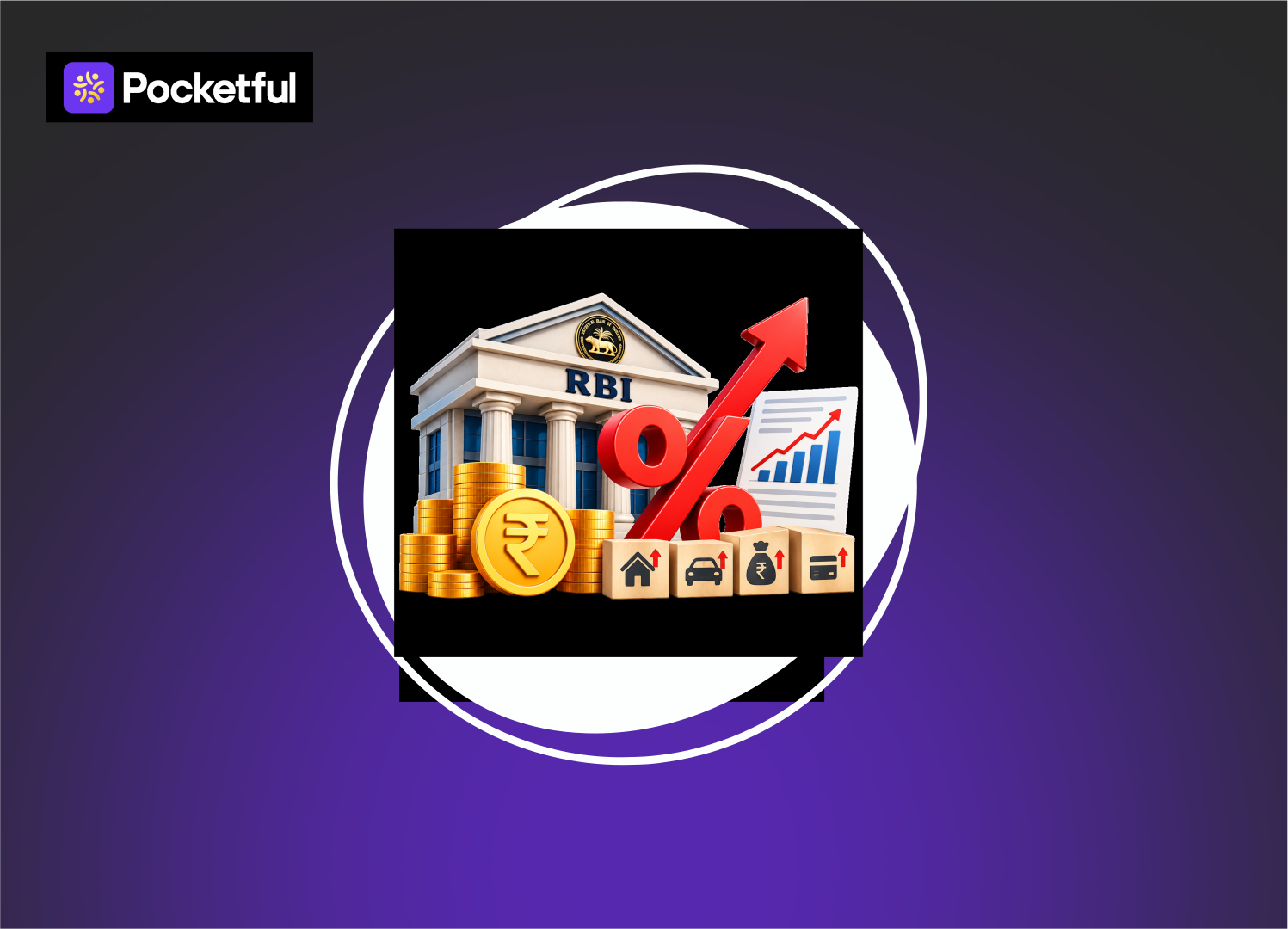
The Reserve Bank of India (RBI) uses the repo rate as an important tool to manage inflation and economic activity. On October 7, 2026, the RBI increased the repo rate by 25 basis points, from 5.25% to 5.50%, marking its first rate hike since February 2023.
The decision can affect borrowers, savers, businesses and investors across India.
Impact of Increasing the Repo Rate in India
The repo rate is the interest rate at which the Reserve Bank of India (RBI) lends funds to commercial banks. A rise in the repo rate will imply that banks will have to bear a higher cost of borrowing which they may pass on to customers through increased lending rates.
The recent 25-bps hike may not have much immediate impact but the effects could be greater if the RBI continues increasing rates. The RBI has changed its stance from neutral to calibrated tightening, implying that it is now more worried about inflation and keeping the interest rates at a higher level.
Effect on Home Loans
Floating rate home loan borrowers will immediately feel the impact of the repo rate rise. Most of the new floating rate loans are pegged to various external benchmark rates, including the repo rate.
In the event of an increase in rates, borrowers will have to pay a higher EMI or longer repayment. For example, a ₹50 lakh loan for 25 years at around 7.5% interest could have its monthly EMI increased by around ₹800 with a 25-bps hike, provided that the loan tenure remains the same.
The impact can become much larger if multiple rate hikes take place. Higher borrowing costs can also reduce housing affordability and cause some buyers to postpone property purchases.
Comparison Table
| Particular | Before Hike | After Hike | Change |
|---|---|---|---|
| Repo Rate | 5.25% | 5.50% | +25 bps |
| Rate Direction | Neutral | Calibrated tightening | Changed |
| Immediate Effect | Lower borrowing cost | Higher borrowing cost | Costlier credit |
| Potential Inflation Impact | Higher demand pressure | Lower demand pressure | Inflation control |
| Potential Savings Impact | Lower deposit yields | Potentially higher yields | Positive for savers |
Impact on Personal, Auto and Business Loans
A hike in repo rate can also impact personal and vehicle loans. Higher funding costs may eventually lead to lenders raising interest rates, but not all loans reprice immediately or by exactly the same amount.
Businesses could also have to deal with higher costs of financing. Companies that have been dependent on loans to fund expansion, working capital or purchases of capital goods may re-evaluate their expansion plans when borrowing becomes expensive.
This could be particularly important for NBFCs, many of which rely on bank loans, bonds and other wholesale funding. Longer term rises in funding costs could eat into their margins unless they were able to pass the burden on to borrowers.
Effect on Inflation, Savings and Investments
Controlling inflation is one of the key reasons for increasing the repo rate. Higher interest rates can discourage excessive borrowing and spending, which can reduce demand and ease inflationary pressure over time .
The RBI’s October 2026 decision was taken against the backdrop of rising inflation risks, including concerns related to crude oil and food prices. Simultaneously, the RBI upgraded its FY27 GDP growth forecast to 7.1% from 6.7%, suggesting that it sees India’s economic growth holding strong despite tighter financial conditions.
Impact on Fixed Deposits
At some point, higher repo rates can be good for savers, as banks may hike rates on deposits and fixed deposits. But in the normal course of business, existing Fixed Deposits continue at the booked rate.
New fixed deposits or those that are renewed after the rate hike may fetch better returns. The size of the benefit will depend on how individual banks react to changes in funding costs and competition for deposits.
Impact of Repo Rate Hike on Banks in India
The RBI has hiked the repo rate by 25 basis points (0.25%), to 5.50% from 5.25%. This can affect both the lending and deposit sides of a bank’s business.
Impact on bank loans: Suppose a company has a floating rate loan of Rs 1 crore at 8.50% interest. If the bank passes on the 25-bps increase in full, the rate could climb to as high as 8.75%. If the entire ₹1 crore remains outstanding, the annual interest cost will go up from about ₹8.50 lakh to ₹8.75 lakh, an increase of about ₹25,000 a year.
Impact on fixed deposits: If banks increase FD rates, the effect can also be a positive one for depositors. For example, if the bank hikes its 1-year FD rate from 6.50% to 6.75%, then a customer investing ₹5 lakh could get an earning of around ₹33,750 in interest at 6.75%, compared with ₹32,500 at 6.50%. This represents an additional ₹1,250 in interest over one year, before applicable taxes.
Thus, a repo rate hike can increase borrowing costs while potentially improving returns on new deposits.
Impact on Stock Market and Debt Investments
Impact on Stock Market: A repo rate hike can put pressure on the stock market as higher borrowing costs may reduce corporate profits and consumer spending. Rate-sensitive sectors such as real estate, automobiles and NBFCs may be affected more. Investors may also become cautious about high-growth stocks when interest rates remain elevated.
Impact on Debt Investments: A repo rate hike can push bond yields higher and affect the prices of existing bonds. For example, if a ₹10 lakh bond has a 7% coupon and market yields rise from 7% to 7.25% after a rate hike, the bond’s market price may decline because newer bonds offer higher yields. Long-duration bonds and debt funds are generally more sensitive to such interest-rate movements. However, new investors may benefit from higher yields on newly issued debt securities.
Repo Rate Increase: Key Impacts
| Area | Impact of Repo Rate Increase | Who Is Affected? |
|---|---|---|
| Home Loans | Floating loan rates may increase, leading to higher EMIs or a longer repayment tenure. | Home loan borrowers |
| Personal Loans | Borrowing costs may rise, making personal loans more expensive. | Individual borrowers |
| Auto Loans | Higher interest rates can increase the cost of vehicle financing. | Car and two-wheeler buyers |
| Business Loans | Higher borrowing costs can increase business expenses and delay expansion plans. | Businesses and MSMEs |
| Fixed Deposits | Banks may offer higher interest rates on new or renewed deposits. | Savers and FD investors |
| Inflation | Higher borrowing costs can reduce spending and demand, helping control inflation. | Consumers and the economy |
| Stock Market | Higher interest rates can put pressure on valuations and rate-sensitive sectors. | Equity investors |
| Debt Investments | Rising yields can affect existing bond prices but may create opportunities in new debt investments. | Debt investors |
| Economic Growth | Higher borrowing costs can moderate consumption and investment, potentially slowing growth. | Businesses and consumers |
What Should Borrowers and Investors Do?
Borrowers should know the interest rates on their loans and how the lender passes on any change in the repo rate to customers. For those having floating rate loans, one can check whether to go for higher EMI, longer tenure or partial prepayment, depending on one’s financial situation.
Depositors can check the latest FD rates before renewing deposits and should not take it for granted that all banks will immediately pass on the entire repo rate hike.
Investors should also not take a decision on one RBI rate announcement. Important factors to watch would be inflation, crude oil prices, future RBI policy decisions, credit growth, corporate earnings and overall economic condition.
The key question is whether the October 2026 hike will be a one-off tweak or the start of a longer tightening cycle.
Conclusion
India’s repo rate hike from 5.25% to 5.50% is significant in that it marks a change in the direction of monetary policy after a long period without a hike. In the near term, lenders could pay more for their financing, while savers could enjoy the possibility of higher rates on deposits.
Impacts will vary for individuals, companies and investment types. Home loans, personal loans, auto finance, NBFC funding and rate sensitive sectors could face more pressure while fixed income investors could see better opportunities with rising yields.
The ultimate economic impact will depend on the size and duration of the rate cycle. Thus, borrowers, savers and investors should keep an eye on the latest repo rate as well as the future course of RBI, inflation and economic growth.
Frequently Asked Questions (FAQs)
01
What is the repo rate?
The repo rate is the rate at which the Reserve Bank of India provides short-term funds to the commercial banks. Repo rate is one of the monetary tools used by RBI for Monetary policy implementation .
02
What is the current repo rate in India?
Following the RBI’s October 7, 2026 policy decision, the repo rate stands at 5.50%, after a 25-basis-point increase from 5.25%.
03
How does an increase in repo rate affect home loans?
An increase can raise interest rates on eligible floating-rate home loans. This may result in higher EMIs, a longer repayment tenure or both, depending on the lender and loan terms.
04
Why does RBI increase the repo rate?
The RBI can hike the repo rate to curb inflation and to avoid runaway demand adding to price pressures. The latest hike comes amid rising inflation worries while the RBI retained an upbeat outlook on economic growth.
05
Does a higher repo rate affect the stock market?
Yes, it can move the stock market, especially rate sensitive sectors. Higher borrowing costs could impact corporate profits, consumer demand and company valuations. But market reaction will also depend on growth, inflation and expectations on RBI policy in the future.
Disclaimer

The information shared in this content is intended solely for educational and informational purposes and should not be considered financial, investment, or trading advice. Any references to stocks, mutual funds, or market instruments are purely for informational purposes and do not constitute recommendations. Investments in financial markets are subject to market risks, and past performance is not indicative of future returns. Readers are advised to conduct independent research, review official documents carefully, and consult a qualified financial advisor before making any investment or trading decisions.
Article History