



| Type | Description | Contributor | Date |
|---|---|---|---|
 | Post created | Pocketful Team | Jul-13-26 |
Read Next
- Is ₹2000 Note Still Valid in India in 2026?
- Best Stock Market YouTube Channels in India for Beginners
- SEBI Action on Jane Street: Impact on Indian Markets
- What is Personal Finance?
- Military Wealth Management: Strategies for Growing and Preserving Your Assets
- India’s Republic Day 2025: Honoring the Nation’s Defense Achievements
- 10 Essential Financial Planning Tips for Military Members
- How Do You Apply for PAN 2.0 Online and Get It on Your Email ID?
- LTP in Stock Market: Meaning, Full Form, Strategy and Calculation
- 15 Best Stock Market Movies & Web Series to Watch
- Why Do We Pay Taxes to the Government?
- What is Profit After Tax & How to Calculate It?
- Budget 2024: Explainer On Changes In SIP Taxation
- Budget 2024: F&O Trading Gets More Expensive?
- Budget 2024-25: How Will New Tax Slabs Benefit The Middle Class?
- Semiconductor Industry in India
- What is National Company Law Tribunal?
- What is Capital Gains Tax in India?
- KYC Regulations Update: Comprehensive Guide
- National Pension System (NPS): Should You Invest?
Income Tax Notice for Salaried Employees: Reasons & Response
Published on : 13th July 2026
|Updated on : 13th July 2026



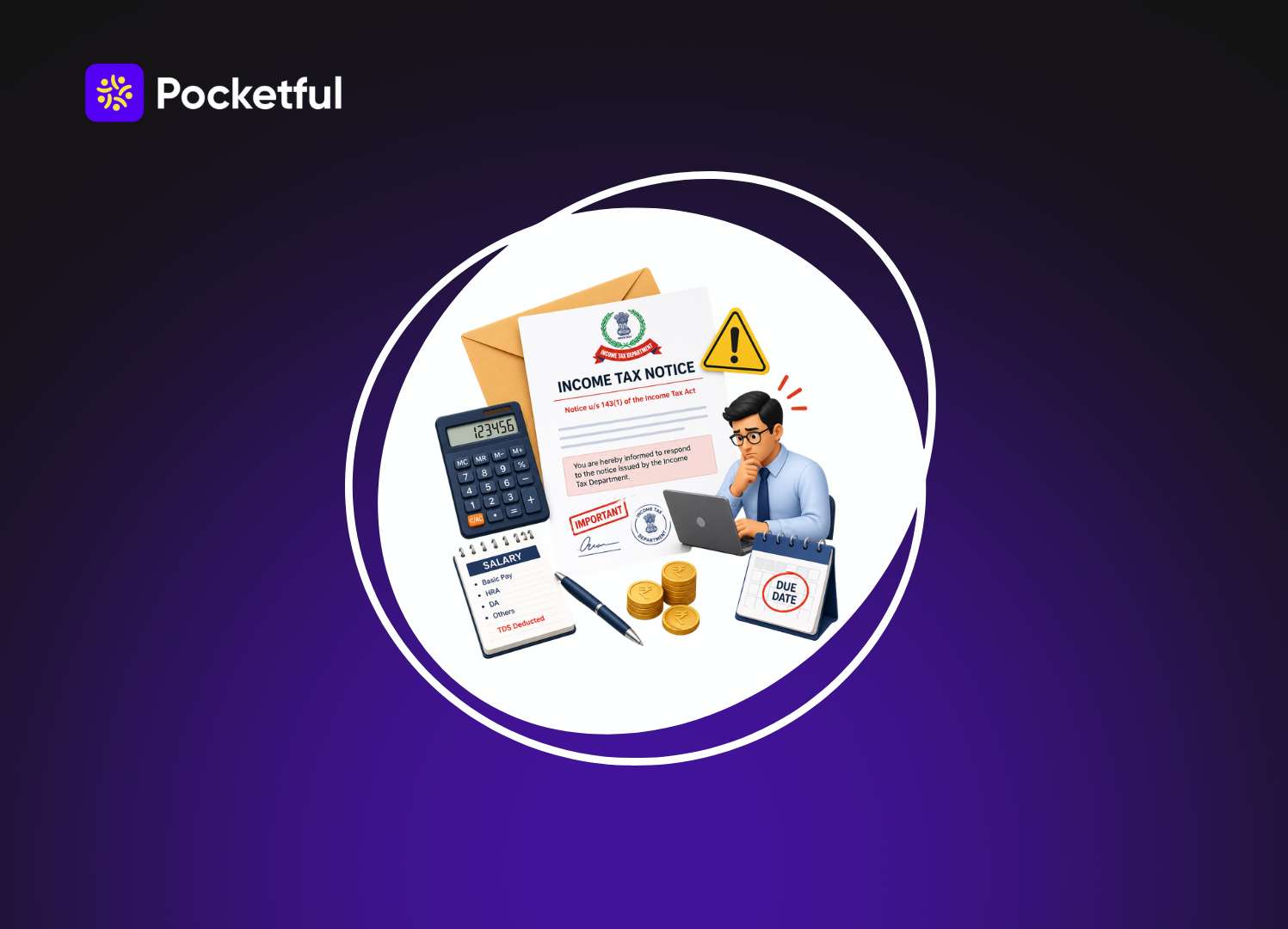
Taxation is always a big concern for everyone and salaried employees are no exception to this. For them this tax period is a very mixed feeling for some it’s a relief and anxiety for many working professionals. You gather your documents, file your returns, and finally take a deep breath. But sometimes, the tax department sends a surprise letter to your inbox. It is completely natural to feel stressed when you see an official email. Most people think these messages only go to big business owners. That is simply a myth. We often see regular office workers getting these alerts for very tiny mistakes. There is no need to panic at all. In this blog, we will help you understand these letters and show you exactly what to do next.
What is an Income Tax Notice?
An official letter from the government tax department is known as a tax notice. The authorities send these messages to ask for more details or to point out mistakes in your submitted tax return. Often, a computer software flags a mismatch automatically. When this happens, the department simply asks you to clarify the numbers.
People often search online about income tax notices salaried individuals to understand why they received one. It is completely normal for working professionals to get them. In fact, income tax notices for salaried individuals are very common today because all financial data is tracked digitally. The government uses smart systems to match your records instantly.
The tax system compares your salary details with bank records and investment proofs. If a gap appears, the system generates income tax notices for salaried employees. These alerts do not always mean a crime was committed. A simple spelling mistake or a missed bank interest entry can easily trigger salaried employees income tax notices. Whenever an income tax notice salaried employees receive requires attention, it will clearly state the problem.
Reasons of Income Tax Notice for Salaried Employees
Let us look at why you might get one of these letters. The reasons are usually very simple.
- Mismatch in TDS details: This is the most common reason for getting an alert. If your employer makes a mistake while depositing your tax, your Form 26AS will not match your return. The system catches this immediately and asks you for an explanation.
- Hidden bank interest: Many of us forget to report the interest earned from savings accounts or fixed deposits. The tax department receives your bank details automatically. Not showing this extra money will cause a mismatch in your file.
- Fake rent and deduction claims: Some individuals try to claim false house rent bills to save money on taxes. The digital system is very smart and easily catches fake claims. Providing incorrect details leads to strict warnings and penalties.
- Not filing returns on time: Missing the final date to submit your tax return is a strict rule violation. If you skip filing entirely, the department will surely send a reminder. Late filing also attracts extra penalty charges of up to five thousand rupees.
- High value purchases: Buying an expensive property or putting large cash amounts in the bank alerts the tax system. The government expects your reported salary to match such huge spending. Unexplained wealth always brings an official inquiry.
- Switching jobs mid-year: When you change jobs, you must combine the salary from both companies for that year. Forgetting the old employer’s salary leads to lower tax payments and triggers an alert. The software will quickly catch the double exemptions claimed.
Types of Income Tax Notice for Salaried Individual
Different situations require different official letters. Understanding the exact type helps you resolve the problem much faster.
| Section Number | Notice Name | Purpose of the Notice |
|---|---|---|
| Section 143(1) | Intimation | Basic check of your tax calculation. |
| Section 139(9) | Defective Return | Your form has missing or wrong details. |
| Section 142(1) | Inquiry | The officer needs extra documents from you. |
| Section 143(2) | Scrutiny | A deep review of your submitted tax file. |
| Section 148 | Reassessment | Checking hidden income from past years. |
| Section 245 | Refund Adjustment | Old tax dues adjusted against a new refund. |
- Notice under Section 143(1): This is the most basic and common alert you can receive. After the system checks your return, it sends this to confirm if your tax calculation is correct. It might ask for extra tax payment or just confirm your refund amount.
- Notice under Section 139(9): If your tax form has missing details or you used the wrong form, it is called a defective return. You get fifteen days to fix the errors on the portal. Failing to do so makes your return completely invalid.
- Notice under Section 142(1): The tax officer sends this to ask for more documents. They might want to see your bank statements or proof of investments to verify your claims. It is also sent if you have not filed a return at all.
- Notice under Section 143(2): This is a much more detailed check of your financial life. The department picks some files for a deep review to ensure no income was hidden. We recommend getting professional help to answer this properly.
- Notice under Section 148: If the tax department finds out that some income was completely hidden in past years, they send this notice. It means your previous years’ tax files are being reopened for checking.
- Notice under Section 245: Sometimes the government holds back your current year refund. This happens to cover an unpaid tax demand from previous years. You get a chance to agree or object to this adjustment online within thirty days.
Read Also: Income Tax on F&O Trading in India
How to Check Income Tax Notice for Salaried Employees
Every individuals should once confirm its notice on income tax portal because of fraudsters, below are the mentioned step to check your notice
- Step 1: Visit the official portal. Open the official government income tax e-filing website www.incometax.gov.in. Do not click on unknown email links or SMS links.
- Step 2: Log into your account. Use your Permanent Account Number (PAN) as your user ID. Enter your correct password and confirm the security code to access your dashboard.
- Step 3: Navigate to pending actions. Look for the pending actions menu on your screen. Click on the section named e-Proceedings or Compliance. This secure area safely holds all your official communications.
- Step 4: View your notices. Find the option that says View Notices or Orders. A complete list of all official letters issued to your specific account will appear on the screen.
- Step 5: Verify the document number. Every real letter has a unique Document Identification Number printed on it. Enter this number in the authenticate section to confirm it is actually from the government.
How to Respond to a Income Tax Notice
Never ignore official letters from the tax department. Replying late can lead to heavy financial fines. Here is how you can respond properly.
- Step 1: Read the notice carefully. Read the letter thoroughly from top to bottom. Identify which section number is mentioned at the top. Always see the last date given to submit your response.
- Step 2: Gather all relevant documents. Collect all your necessary papers in one place. Keep your salary slips, bank statements, and rent receipts ready. Save them as clear digital PDF files on your computer folder.
- Step 3: Access the response section. Log into the official tax portal once again. Navigate to the same e-Proceedings tab where you originally found the letter. Click on the submit response button.
- Step 4: Select your response type. The portal allows you to fully agree, partially agree, or disagree with the tax demand. If you agree with the demand, you must pay the pending tax online immediately. If you disagree, you must explain why their calculation is wrong.
- Step 5: Upload your proof. Attach the saved PDF files to prove the claims you are making. Write a short, respectful, and clear explanation in the text box provided.
- Step 6: Submit and save. After clicking the final submit button, download the acknowledgment receipt immediately. Keep this transaction ID safe for any future reference.
How to Avoid Income Tax Notice to Salaried Employees?
It is always better to prevent problems than to fix them later. You can easily avoid these letters by following some basic rules.
- Report all your extra earnings: Always declare the interest earned from savings accounts and fixed deposits. Every single rupee counts in the digital tracking system today.
- Match your numbers carefully: Compare your tax form with the Annual Information Statement. Ensure the tax deducted by your employer matches the government portal exactly.
- Keep real proofs ready: Never submit fake rent receipts or fake donation bills to save tax. Keep the actual bills safe for at least seven years.
- File before the deadline: Submit your tax return well before the final due date. Last minute rushing often causes silly typing mistakes.
- Track your investments smartly: Tracking your mutual funds and stocks can be hard. Using a trusted investment platform like Pocketful (https://www.pocketful.in/) helps keep your financial records very organized. This makes your tax filing much easier and completely error free.
Read Also: Income Tax Slab FY 2026-27 Explained
Conclusion
Receiving a message from the tax department is just a standard procedure in today’s digital world. Department intimate to clear your pending tax. By staying honest with your details, keeping good records and responding on time, you can resolve these issues peacefully. We hope this guide helps you feel more confident about handling your taxes.
Frequently Asked Questions (FAQs)
01
What is the meaning of a tax notice?
It is an official letter from the tax department. It asks for clarification or points out errors in your filed return.
02
What are the benefits of responding early?
Responding early saves you from heavy penalties and legal actions. It also ensures your pending tax refunds process much faster.
03
How to use the tax portal to reply?
Log into the official e-filing website. Go to the e-Proceedings section, click on your pending notice, and submit your response with proofs.
04
What is the benefit of the Document Identification Number?
The Document Identification Number helps you check if the notice is real. It protects you from online scams and fake emails.
05
How to use Annual Information Statement (AIS)?
Use your AIS on the tax portal to check all your financial records. Matching your return with AIS helps avoid future tax notices.
Disclaimer

The information shared in this content is intended solely for educational and informational purposes and should not be considered financial, investment, or trading advice. Any references to stocks, mutual funds, or market instruments are purely for informational purposes and do not constitute recommendations. Investments in financial markets are subject to market risks, and past performance is not indicative of future returns. Readers are advised to conduct independent research, review official documents carefully, and consult a qualified financial advisor before making any investment or trading decisions.
Article History
