



| Type | Description | Contributor | Date |
|---|---|---|---|
 | Post created | Pocketful Team | Jul-10-26 |
Read Next
- NRO Demat Account: Complete Guide
- SEBI Rules for Demat Account: Opening, Closure & More
- What Is Collateral Amount In Demat Account?
- Best Retirement ETFs in India
- Demat Account for Private Limited Company – Guide 2026
- Demat Account for Partnership Firm – Documents & Process
- How to Change Name in Demat Account
- What is a Repatriable Demat Account?
- How to Open an LLP Demat Account in India: Documents & Process
- What Is Power of Attorney (POA) in a Demat Account?
- Benefits of HUF Account in India
- FIFO in Demat: Meaning, Rules & Tax Impact
- Difference Between Individual and HUF Demat Accounts
- Demat Account: Fees & Charges
- What is Ledger Balance in a Demat Account?
- What is Demat Debit and Pledge Instruction (DDPI)?
- What is Non-Repatriable Demat Account? Meaning and Definition
- जानिए 15 भारत का बेस्ट डीमैट अकाउंट
- What is Corporate Demat Account? Features, Benefits, and Eligibility
- HUF Demat Account: Rule, Documents & How to Open
How to Protect Demat Account from Fraud: 15 Safety Tips
Published on : 11th July 2026
|Updated on : 10th July 2026



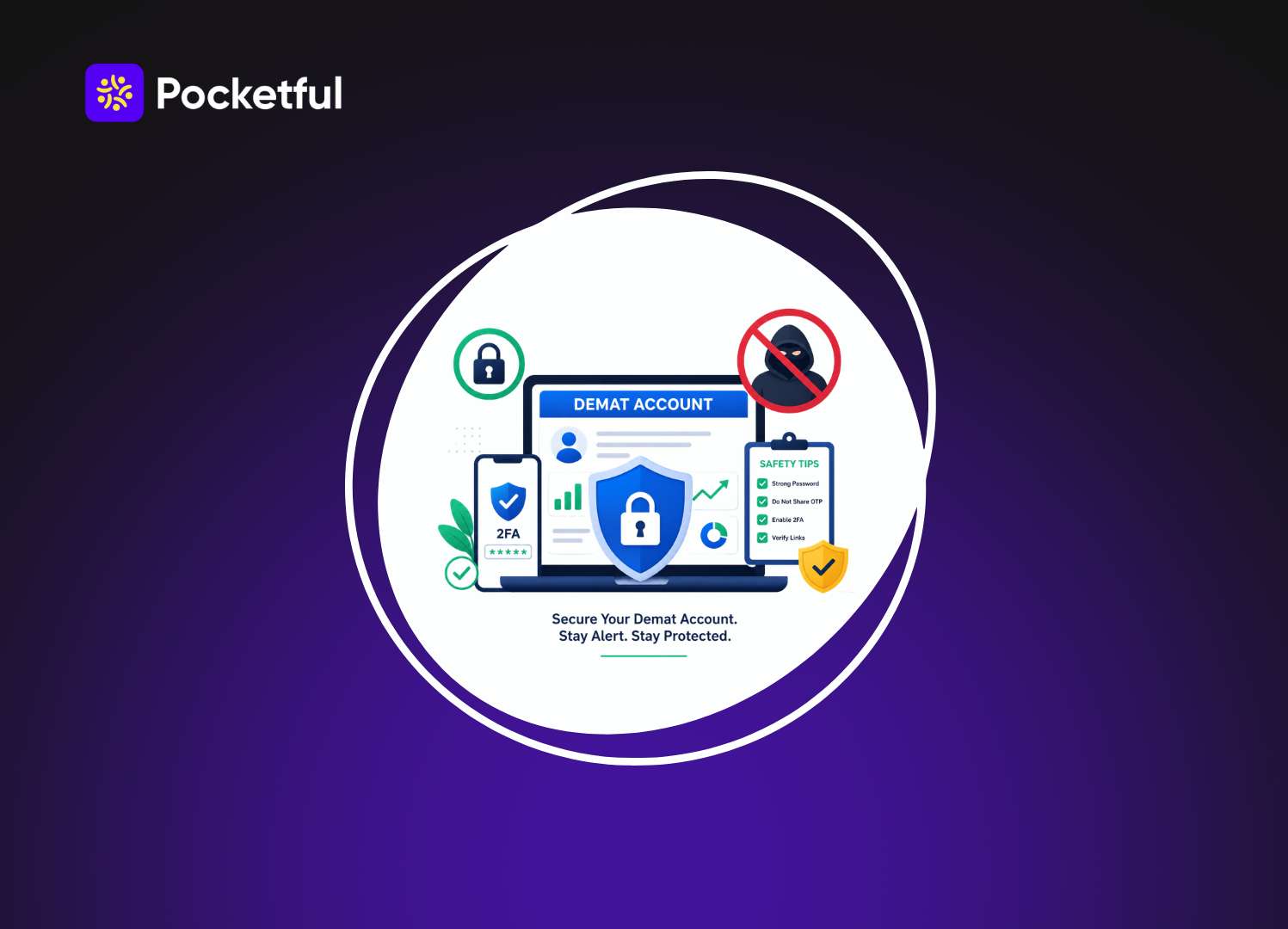
Demat account security matters a lot today because digital investments are growing very fast. The stock market attracts many new people every day. Unfortunately, this growth also brings in dangerous cybercriminals looking for an easy target. There is a massive rise in online investment scams targeting ordinary retail investors in India. Fraudsters trick innocent individuals to steal their hard earned money and valuable shares. They use clever tactics to gain illegal access to personal investment portfolios.
What is a Demat Account?
Many beginners often ask a very common question. Is Demat account a safe option for your investments? To answer this question, one must first understand the basic purpose of this system. A Demat account holds shares and securities in an electronic format. This system completely replaces old paper certificates and prevents physical theft.
The main purpose of a Demat account is to keep investments secure and make daily trading easy. It works much like a regular bank account. Instead of keeping physical cash, it safely stores digital shares, mutual funds, and government bonds.
When an investor buys shares, they get credited directly to this account. When they sell shares, they get debited. These accounts are generally very safe because they are tightly regulated by the government. Depositories like CDSL and NSDL monitor them constantly to prevent errors and fraud.
Can a Demat Account Be Hacked or Misused?
Yes if proper care is not taken security issues can be there with your electronics accounts. A common risk is unauthorized trading by unknown people. This happens when a scammer logs in and trades without the true owner’s permission.
There is a big difference between actual computer hacking and social engineering. Hacking involves breaking into highly secure systems using complex technical skills. Social engineering simply involves tricking a person into giving away their secret password or OTP.
When researching whether a demat account handling service is safe or not, individuals must check the platform’s security features. A high amount of demat account fraud happens purely due to human error. Investors might unknowingly share sensitive details or click on dangerous internet links.
Common Types of Demat Account Frauds
Investors should know the common tricks used by scammers. The table below explains the most frequent types of frauds seen in the market today.
| Fraud Type | Simple Explanation |
|---|---|
| Phishing Emails and Fake Login Pages | Scammers send fake identical emails just like your broker and these emails have links that can directly steal your login details even if pressed once. |
| OTP and Verification Code Scams | Fraudsters call and pretend to be helpful customer care agents. They ask the investor to share a six digit OTP to solve a fake problem. |
| Fake Customer Support Calls | Scammers put fake helpline numbers on the internet. When somebody searches for help they call on these numbers and scammers trick them to get access to their account and all details. |
| Screen Sharing App Frauds | Here Scammers trick and ask the individual to download screen sharing apps like Anydesk or TeamViewer. And once the screen is shared the scammers can clearly see the investors personal information and relevant data. |
| SIM Swap Fraud | Criminals manage to get a duplicate SIM card of the investor’s registered mobile number. They then receive all the banking and trading OTPs directly on their own device. |
| Unauthorized Power of Attorney (PoA) Misuse | Sometimes untrustworthy brokers might misuse the PoA document given by the client. They might sell shares or transfer funds without the actual owner’s consent. |
| Fake Trading Apps and Investment Platforms | Scammers create bogus mobile applications that look very real. Users deposit money into these fake apps, but the funds never reach the actual stock market. |
| Malware and Keylogger Attacks | Clicking on unknown links sometimes install malware or harmful software to the investors system. Keyloggers record every single keystroke, easily capturing secret passwords without anyone knowing. |
Signs That a Demat Account May Be Compromised
Getting to know about the scam can save you a lot of money. Here are some ways by which you can check if your account is in danger.
| Warning Sign | What It Means |
|---|---|
| Unauthorized Login Alerts | Receiving an SMS or email about a login from an unknown location is a huge red flag. It means someone else currently has the account password. |
| Unknown Buy or Sell Transactions | Finding strange trades in the transaction history is a clear sign of trouble. Scammers might be using the stolen funds to manipulate risky penny stocks. |
| Missing Shares from Holdings | If long term investments suddenly disappear from the portfolio, it indicates a serious security breach. Immediate action is required to freeze the account. |
| Unrecognized Device Access | Modern security systems often show which devices are currently logged in. Spotting an unknown mobile phone or computer model means the account is fully compromised. |
| Unexpected Changes in Contact Information | Scammers often try to change the registered email or phone number first. This completely stops the real owner from getting transaction alerts. |
Read Also: How to Enable Two-factor Authentication in Demat Account?
15 Best Ways to Protect a Demat Account from Fraud
1. Choose a SEBI-Registered Broker
It is crucial to pick a reliable and well known Depository Participant. Registered brokers follow strict rules and offer better protection against scams. An unregistered broker might easily run away with the invested money.
2. Create a Strong and Unique Password
The best way is to put a strong password that contains capital letters, numbers, and special symbols. The password shall be a mix of everything and not just your date of birth or name as longer complex passwords are very hard to break.
3. Enable Two-Factor Authentication (2FA)
This means adding a second layer of security to your account, even if the password is breached your account would require an additional step that is the OTP to log in. Most modern brokers make this feature mandatory for all users.
4. Never Share OTPs or Login Credentials
Official brokers and depositories never ask for passwords or OTPs over a phone call. The information shall always be kept secret at all times and shall not be shared with anyone.
5. Regularly Change the Password
Updating the account password every few months is a very good habit. It highly reduces the risk of old data breaches affecting the account. A fresh password keeps the account safe from past mistakes.
6. Monitor Holdings Frequently
Investors shall regularly keep an eye on their portfolio as it helps in spotting errors. Errors if caught within time helps you to prevent major financial losses.
7. Check SMS and Email Alerts from Depositories
CDSL and NSDL send direct alerts for every single trade. Reading these messages carefully helps catch unauthorized activities instantly. These alerts act as an early warning system for the investor.
8. Keep the Mobile Number and Email Updated
You must always keep your credentials updated as all the security alerts are directly shared on your registered details. It makes sure that all security alerts are directly reaching you on time. A wrong phone number means missing out on crucial security warnings.
9. Avoid Public Wi-Fi While Trading
One should always avoid using free public networks and Wifis as they are generally very insecure. It is very easy for hackers to intercept these open networks and steal your data and password. Always use a private mobile network when opening a trading app.
10. Install Antivirus and Update Devices
Using good security software keeps dangerous malware away. Updating the phone and computer operating systems fixes known security weaknesses. A secure device is the first step to safe trading.
11. Never Click Suspicious Links
Scam messages often contain links offering free stock tips or huge profits. Clicking them can download dangerous viruses or lead to fake websites. It is best to simply delete such messages immediately.
12. Secure the Debit Instruction Slip (DIS)
The DIS booklet is exactly like a bank chequebook. It should be kept safely, and one must never leave a signed blank slip with a broker. A signed slip allows anyone to transfer shares out of the account.
13. Be Careful Before Signing a Power of Attorney (PoA)
Investors should insist on a limited purpose PoA or use the new DDPI system. This stops brokers from transferring shares without proper permission. The new DDPI system is much safer for retail investors.
14. Freeze the Demat Account If Not Using It
People traveling abroad or stopping trading for a while should lock their accounts. Depository participants offer a simple facility to freeze accounts temporarily. This stops any transactions from taking place until the account is unfrozen.
15. Log Out After Every Trading Session
Investors shall not directly close the mobile app rather you should manually log out every time. This needs to be done so that nobody can access the app or funds as sometimes the app still runs in the background. This is especially important when using a shared computer.
Understanding CDSL and NSDL Security Features
The two main depositories in India offer excellent security features. The table below outlines these built in protections.
| Security Feature | How It Helps |
|---|---|
| SMS Alerts for Every Transaction | The depositories send instant messages for all debit and credit movements. This keeps investors well informed about everything happening with their shares. |
| Email Notifications | Detailed statements and transaction confirmations are sent directly via email. These official emails provide a clear and permanent record of all market activities. |
| Account Statement Verification | Both NSDL and CDSL provide consolidated account statements on their websites. Investors can log into depository portals directly to double check their actual holdings. |
| Freeze and Unfreeze Facility | Depositories allow account holders to freeze their entire account or just specific shares. This is a very powerful tool to stop all unauthorized transfers instantly. |
| Trusted Device Authentication | Modern security systems are designed to recognize trusted devices. Logging in from a completely new computer often triggers an extra security verification step. |
How to Verify Every Transaction in a Demat Account
Keeping a close watch on transactions is very necessary. Here is how investors can verify their trades safely.
| Verification Method | Why It Is Important |
|---|---|
| Checking Holding Statements | Investors must compare the shares shown in their trading app with the official depository statement. These two numbers should always match perfectly. |
| Reviewing Daily Transaction Reports | Brokers send a contract note at the end of every trading day. This document contains exact details of all the buying and selling done on that specific day. |
| Matching Trades with Broker Records | It is a good practice to check the financial ledger regularly. Ensure that the money deducted from the bank matches the exact value of the shares purchased. |
| Importance of Monthly Account Reconciliation | Setting aside time once a month to review the account is highly vital. Monthly checks help spot small discrepancies that might otherwise go completely unnoticed. |
Read Also: What is TPIN in Demat Account?
What Should You Do If You Suspect Fraud?
Step 1: Immediately Change your login credentials
The very first action is to secure the login details. Changing the password and the T-PIN stops the hacker from doing further damage. This step must be taken within seconds of spotting a fraud.
Step 2: Freeze the Demat Account
Investors must quickly contact the depository or broker to lock the account. A frozen account cannot transfer any shares out to another person. This keeps the remaining shares safe.
Step 3: Contact the Broker
The trading platform’s customer support must be informed immediately. They can easily cancel pending orders and block unauthorized fund withdrawals. Brokers have special tools to halt suspicious activities.
Step 4: Inform the Depository (CDSL/NSDL)
Depositories should be made fully aware of the suspicious activity. They have the authority to trace the share movements and help in the official investigation and make the process speedy.
Step 5: Report the mishappening to SEBI
You must file a formal complaint on the SEBI SCORES portal. This makes sure that the broker and authorities take the matter seriously and resolve it as soon as possible. SEBI strictly monitors these complaints.
Step 6: File a Police/Cyber Crime Complaint
The victim should report the fraud to the national cyber police by dialing their helpline number 1930, this helps in tracing the stolen funds immediately. A quick police report is very helpful.
How SEBI Protects Investors Against Demat Frauds
SEBI works very hard to keep the market safe. The following table highlights the main steps taken by the regulator.
| Protective Measure | Details |
|---|---|
| Regulatory Framework | SEBI creates strict rules that all market participants must follow. These regulations ensure that the stock market remains fair, transparent, and secure for everyone. |
| Depository Monitoring | The regulator keeps a very close watch on NSDL and CDSL operations. This constant supervision ensures that depositories manage investor data and shares carefully. |
| Broker Compliance Requirements | Brokers face heavy penalties if they misuse client funds or shares. SEBI regularly conducts strict audits to ensure brokers are not involved in any illegal activities. |
| Investor Protection Mechanisms | SEBI runs the SCORES portal to handle public complaints efficiently. They also enforce systems like the direct payout mechanism, bringing shares directly to the investor’s account. |
Conclusion
The digital age brings great convenience to the stock market. However, staying alert is the absolute key to keeping investments completely safe. By following basic security rules, anyone can enjoy a peaceful and profitable investing journey.
For more market news and insights, download Pocketful, offering users zero brokerage on delivery trades and an easy to use platform designed for both beginners and experienced investors.
Frequently Asked Questions (FAQs)
01
Is it safe to use a public Wi-Fi network while trading in stocks?
No, free Wi-Fi or public connections are very insecure and are easy to hack by the scammers. One should always use a private network or mobile data while trading.
02
What is a DIS booklet in the stock market?
A Debit Instruction Slip (DIS) is very similar to a chequebook given by the bank. It is a physical paper document used to authorize the manual transfer of shares between accounts.
03
How fast should one report an unauthorized transaction?
One should report as soon as they get to know about the suspicious activity. Also one should immediately inform the cybercrime police by dialing 1930 as this helps in freezing the funds immediately.
04
Can SEBI help if a broker commits fraud?
SEBI helps in protecting retail investors as just by filing a formal complaint with SEBI SCORES online portal the action starts.
05
Can a frozen Demat account still receive dividends?
Yes, even if the Demat account is freezed due to security reasons investors still get the benefits of dividends linked to their bank account.
Disclaimer

The information shared in this content is intended solely for educational and informational purposes and should not be considered financial, investment, or trading advice. Any references to stocks, mutual funds, or market instruments are purely for informational purposes and do not constitute recommendations. Investments in financial markets are subject to market risks, and past performance is not indicative of future returns. Readers are advised to conduct independent research, review official documents carefully, and consult a qualified financial advisor before making any investment or trading decisions.
Article History