



| Type | Description | Contributor | Date |
|---|---|---|---|
 | Post created | Pocketful Team | Jul-10-26 |
Read Next
- Compounding Strategy in Commodity Trading
- Commodity Channel Index – CCI Meaning, Formula & Strategy
- How to Invest Long Term in Commodities
- Hard vs Soft Commodities: Key Differences
- What is Indian Commodity Exchange (ICEX)?
- Top 10 Precious Metals to Invest in India
- Gold Import Duty Hike in India – Reasons & Impact
- Silver Hallmark India Purity: How to Check, Meaning & Investment Guide (2026)
- How to Buy Silver Coins & Bars in India
- Silver Price Last 10 Years in India
- Gold to Silver Ratio in India: Meaning, Formula & Investment Strategy (2026)
- Is Silver a Good Investment in 2026? Benefits & Risks
- What is Kasu Gold?
- Which City Has the Highest Gold Price in India?
- Which City Has the Lowest Gold Price in India?
- AI in Commodity Trading: Benefits, Risks & Future Trends
- MCX vs NCDEX: Key Differences
- MCX Copper Trading Guide 2026: Price Factors & Strategies
- What is Commodity Margin?
- How to Hedge with Commodity Trading: A Practical Guide
What is Commodity Swap?
Published on : 11th July 2026
|Updated on : 10th July 2026



Commodity prices change every day due to global events and supply issues. This daily price volatility creates large financial risks for many companies. To manage these market risks, businesses and investors actively use commodity derivatives. These financial tools help secure stable prices for raw materials in advance. One of the most popular tools is a basic agreement to exchange cash flows. This agreement helps buyers and sellers avoid sudden price spikes and plan their budgets with confidence.
What is a Commodity Swap?
To manage expenses effectively, a business will often use a commodity swap. This is a special financial contract where two parties agree to exchange cash flows based on the price of an underlying raw material.
Companies use them primarily to hedge against unpredictable price changes in the open market. For instance, a factory can secure a stable cost for raw materials over a long period.
The importance of these contracts in financial markets is massive. They provide much needed price stability for essential global goods. Furthermore, they help large institutions manage major financial risks without the burden of storing physical materials.
Understanding the Basics of Commodity Swaps
A derivative is a financial instrument that gets its value from an underlying asset. Instead of buying the physical asset directly, participants trade a contract based on its future value.
The Role of an Underlying Commodity is central to the contract. Every agreement is tied to a specific raw material, like gold, crude oil, or wheat. The price movement of this specific material decides the final financial outcome.
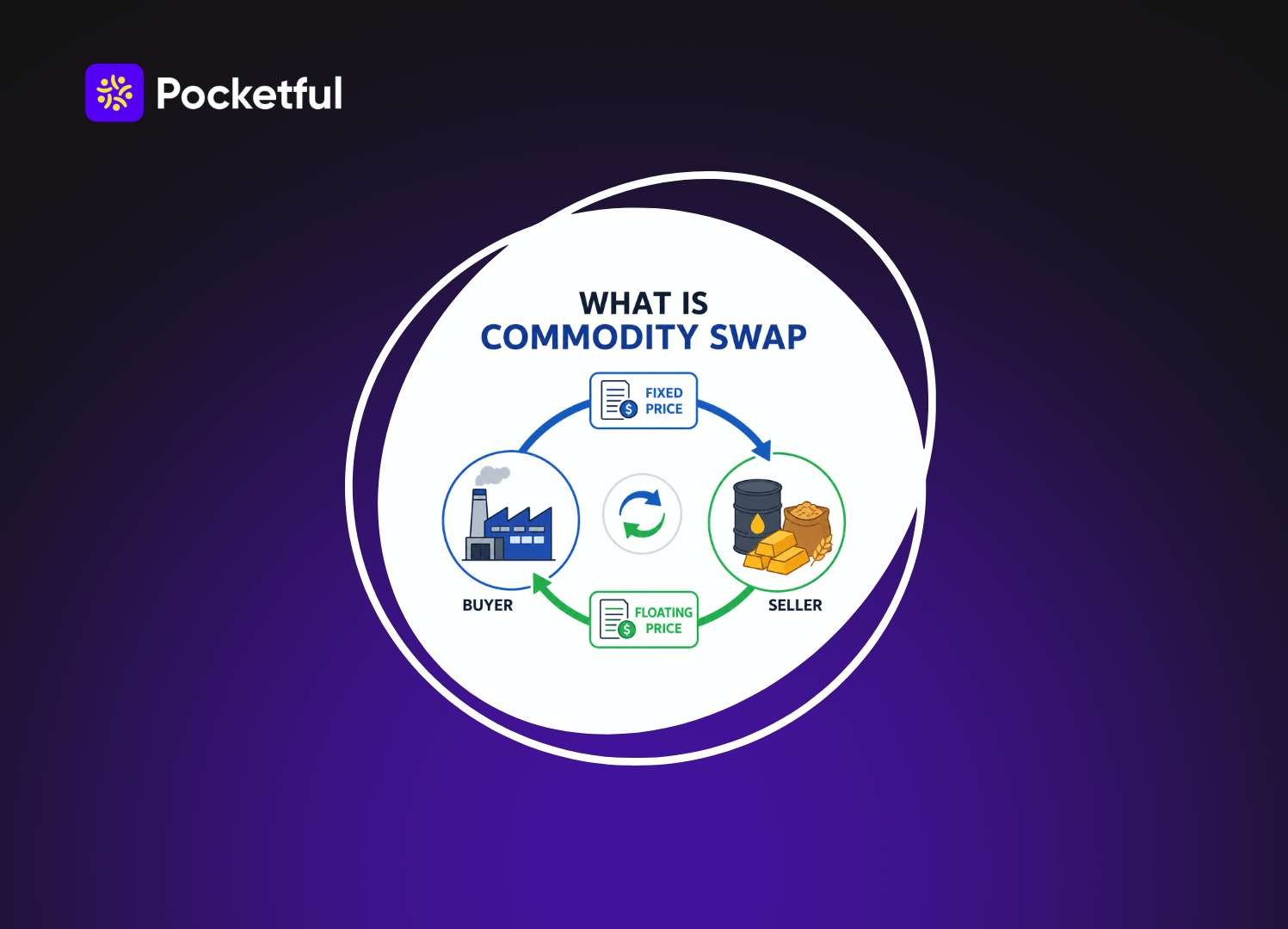
Fixed Price vs Floating Price is a key concept to understand. The fixed price is agreed upon at the very beginning and never changes. The floating price constantly changes based on current market rates.
| Feature | Fixed Price | Floating Price |
|---|---|---|
| Definition | A set price agreed upon at the start of the contract. | A variable price based on current market rates. |
| Stability | Remains completely unchanged over the contract timeline. | Changes constantly with daily market fluctuations. |
| Best For | Buyers wanting to lock in a maximum purchase cost. | Sellers wanting to benefit from rising market prices. |
The two main participants are the fixed rate payer and the floating rate payer. Usually, banks act as middlemen to safely facilitate the trade.
Types of Commodity Swaps
There are several variations of commodity swaps designed for different corporate and financial needs.
- Fixed-for-Floating Commodity Swap: This is the most popular setup where one party pays a fixed price and gets a floating price in return. It offers huge advantages for end users who want to strictly budget their raw material costs.
- Floating-for-Floating Commodity Swap: In this unique setup, both parties pay a floating price. However, each price is tied to a different market index. It is practical for companies looking to manage exposure between two different regional markets.
- Fixed-for-Fixed Commodity Swap: Here, both parties exchange fixed prices based on different future expectations. This is rarely used but becomes highly useful when entities operate across different global pricing bases.
- Commodity-for-Interest Rate Swap: This involves one party paying a rate based on raw material prices, while the other pays a standard interest rate. It is extremely useful for businesses wanting to hedge against interest rate risks and raw material risks simultaneously.
How Does a Commodity Swap Work?
1. Step-by-Step Working of a Commodity Swap
Two parties agree on a specific quantity of a raw material. They decide a fixed price and choose a market benchmark for the floating price. Over a set timeline, they compare the fixed price to the actual market price at regular intervals.
2. Cash Settlement vs Physical Settlement
The method of closing the contract is very important.
| Settlement Type | How It Works | Common Use Case |
|---|---|---|
| Cash Settlement | Only the price difference is paid in cash. | Used by most financial investors and businesses. |
| Physical Settlement | The actual raw material is delivered to the buyer. | Used only when the company needs the physical goods. |
If the market price goes above the fixed price, the floating rate payer pays the extra difference. If the market price drops, the fixed rate payer must pay the difference.
Suppose a company locks in oil at Rs 6,000 per barrel. If the market price rises to Rs 6,500, the counterparty will pay the company Rs 500 per barrel.
Commodity Swap Example
A clear commodity swap example helps explain the real world applications of these contracts.
- Example of an Airline Hedging Fuel Prices: An airline consumes massive amounts of jet fuel and wants to avoid sudden price spikes. The airline enters a contract to pay a fixed price for fuel. If global fuel prices rise, the airline receives a cash payment to cover its extra real world costs.
- Example of a Gold Producer Managing Price Risk: A gold mining company worries that gold prices might drop before selling their harvest. The producer agrees to a contract where they receive a fixed price for their gold. If market prices fall, the contract pays them the difference to make up for lost revenue.
- Example of a Manufacturing Company Locking Raw Material Costs: A factory uses copper to manufacture electrical wires. To keep production costs highly stable, the factory uses a contract to secure a fixed copper price. This protects their budget from sudden market jumps.
These examples clearly show that these contracts act like an insurance policy. They protect both buyers and sellers from unexpected market shocks.
Who Uses Commodity Swaps?
- Commodity Producers: Producers like farmers and miners use commodity swaps so that the selling prices are locked, guaranteeing a steady revenue.
- Manufacturing Companies: Manufacturing units and big factories use them to control the raw material cost like copper or steel.
- Airlines and Transportation Companies: These types of businesses are very sensitive to changing oil prices and companies use them to manage their fuel expenses.
- Energy Companies: Oil extracting companies and big power plants also use this so that the fluctuating crude oil prices can be managed and the cost of production remains low.
- Commodity Traders: Professional traders use commodity swaps to gain profits from the changing prices.
- Financial Institutions: Financial institutions play the role of a middleman to structure and sell these contracts to different corporate clients.
- Institutional Investors: Pension funds use them to mitigate risk and diversify their portfolio.
Read Also: What Is Colour Trading
Why Are Commodity Swaps Important?
- Hedging Against Price Volatility: These contracts act as a shield against the sudden price changes of the essential goods.
- Stabilizing Cash Flows: By locking prices of commodities companies can predict exactly in which direction the prices will go.
- Improving Financial Planning: Knowing the exact prices helps the financial managers to create long term budgets for their future.
- Reducing Business Uncertainty: By securing the prices and lowering risks can help the businesses to focus on growth rather than worrying about the market prices.
- Portfolio Diversification: They give large investors a simple chance to enter the raw materials market without needing physical goods.
Benefits of Commodity Swaps
It gives protection against the highly fluctuating prices in the market. This helps the companies to completely avoid huge financial losses if the market starts to act against them.
- Predictable Costs and Revenue help make daily operations smooth. Buyers always know their maximum possible costs, and sellers always know their minimum possible income.
- Better Risk Management is possible because these specialized contracts allow companies to tailor their strategies. They can base their plans on unique business needs and current market conditions.
- Customized Contract Terms are a huge plus. Unlike standard exchange traded futures, these agreements are extremely flexible.
- Lower Transaction Costs are another major advantage. Since these are generally settled entirely in cash, companies save massive amounts of money on physical storage logistics.
Risks and Challenges of Commodity Swaps
- Counterparty Risk: This is the constant risk that the other party might fail or refuse to make their required cash payment.
- Commodity Price Risk: If market prices move heavily in one unexpected direction, one party will face a large financial loss.
- Liquidity Risk: Since these are private customized agreements, it can be very hard to exit or sell the contract early.
- Credit Risk: There is always a lingering chance that a participating bank might face a sudden credit downgrade.
- Market Volatility: Extreme weather or major global events can cause price swings so large that they break a company’s safety limits.
- Complexity in Pricing: Accurately calculating the fair value of a long term contract requires highly advanced financial knowledge.
Factors That Influence Commodity Swap Pricing
- Current Spot Price: The natural starting point for any pricing calculation is the current market price of the physical good.
- Forward Price Curve: Financial models closely look at expected future prices to properly set the fixed rate for the contract.
- Interest Rates: Prevailing national interest rates are used to calculate the exact present value of all future cash payments.
- Supply and Demand: Basic global economics play a huge role in pricing. Expected shortages will rapidly drive up the floating prices.
- Storage and Transportation Costs: These real world physical costs are always factored into the benchmark indices used.
- Seasonal Factors: Agricultural goods and energy demand often change heavily with the seasons, deeply affecting long term prices.
- Market Liquidity: A highly traded and popular material will generally have lower hedging costs compared to a very rare material.
Commodity Swaps in India
- Are Commodity Swaps Available in India?: Yes, they are highly active and available. Large Indian corporations use them frequently to manage their massive exposure to global price changes.
- Regulatory Framework: The Indian financial market is strictly regulated. This ensures high safety and market transparency at all times.
- Role of SEBI: The Securities and Exchange Board of India regulates the entire commodity derivatives market. SEBI actively monitors trades and ensures that all parties follow strict risk management rules.
- OTC (Over-the-Counter) Market: Most of these specific agreements in India are traded in the OTC market. This means they are private contracts arranged directly between a company and a bank.
- Commodity Exchanges vs OTC Contracts: Indian exchanges like MCX offer standard futures, while the OTC market offers customized agreements. OTC contracts offer much more flexibility but carry higher counterparty risk.
Read Also – How to Trade in the Commodity Market?
Conclusion
Navigating the financial markets can seem difficult, but using the right tools makes a huge difference. These derivative contracts offer a brilliant way to stabilize costs and protect hard earned revenue. By removing the stress of market volatility, businesses can confidently plan for a brighter financial future.
For more market news and insights, download Pocketful – offering users zero brokerage on delivery trades and an easy to use platform designed for both beginners and experienced investors.
Frequently Asked Questions (FAQs)
01
What is Commodity Swap?
It is a financial contract where two parties agree to exchange cash flows based on the price of a specific raw material. One party pays a fixed price, while the other pays a fluctuating market price.
02
How is a swap different from a futures contract?
A futures contract is a standardized agreement traded on a public exchange. A swap is a private, customized agreement traded over the counter and is usually settled entirely in cash.
03
Are these contracts legal and regulated in India?
Yes, they are completely legal in India. They are firmly regulated by the Securities and Exchange Board of India and the Reserve Bank of India to ensure market safety.
04
Do these agreements require physical delivery of goods?
Generally, no. The vast majority of these contracts are cash settled. This means the parties only exchange the financial price difference rather than shipping real physical goods.
05
Can retail investors easily trade these contracts in India?
Usually, no. These contracts are highly complex and mostly used by large corporations, banks, and institutional investors. Retail investors generally participate in the market through standard futures and options instead.Commodity prices change every day due to global events and supply issues. This daily price volatility creates large financial risks for many companies. To manage these market risks, businesses and investors actively use commodity derivatives. These financial tools help secure stable prices for raw materials in advance. One of the most popular tools is a basic agreement to exchange cash flows. This agreement helps buyers and sellers avoid sudden price spikes and plan their budgets with confidence.
Disclaimer

The information shared in this content is intended solely for educational and informational purposes and should not be considered financial, investment, or trading advice. Any references to stocks, mutual funds, or market instruments are purely for informational purposes and do not constitute recommendations. Investments in financial markets are subject to market risks, and past performance is not indicative of future returns. Readers are advised to conduct independent research, review official documents carefully, and consult a qualified financial advisor before making any investment or trading decisions.
Article History