


| Type | Description | Contributor | Date |
|---|---|---|---|
 | Post created | Pocketful Team | Nov-06-26 |
Read Next
- Muhurat Trading History: Nifty & Sensex 10-Year Returns
- How to Hedge With Commodity Futures
- 5 Best Timeframes for Scalping
- What Is Breakeven Point & How to Calculate It?
- Directional Trading Strategies: Overview, Types & Examples
- Nifty CPSE Index: Meaning, Stocks & Weightage
- Short Selling vs Put Options: Key Differences
- Spin-Off vs Split-Off: Key Differences, Examples & Tax in India
- Trendline Trading: Types, Strategies & How to Draw
- What Is Freak Trade in the Stock Market?
- What Is Active Trading? Types, Strategies & Risks
- USD INR Trading: Lot Size, Strategies & How to Trade
- What Is a Trading Halt in the Stock Market?
- Binary Options Trading: How to Trade?
- What is Carbon Credit Trading Scheme? Types & Example
- How to Reactivate a Trading Account Online: Step-by-Step Guide
- Equity Curve in Trading: Meaning, Analysis & Examples
- How to Place an Order During CAS Window
- What is the Impact Cost in Trading?
- Stock Market Crash in India: History & Causes
What Is Mirror Trading? Meaning, Benefits, Risks & How It Works
Published on : 9th November 2026
|Updated on : 9th November 2026



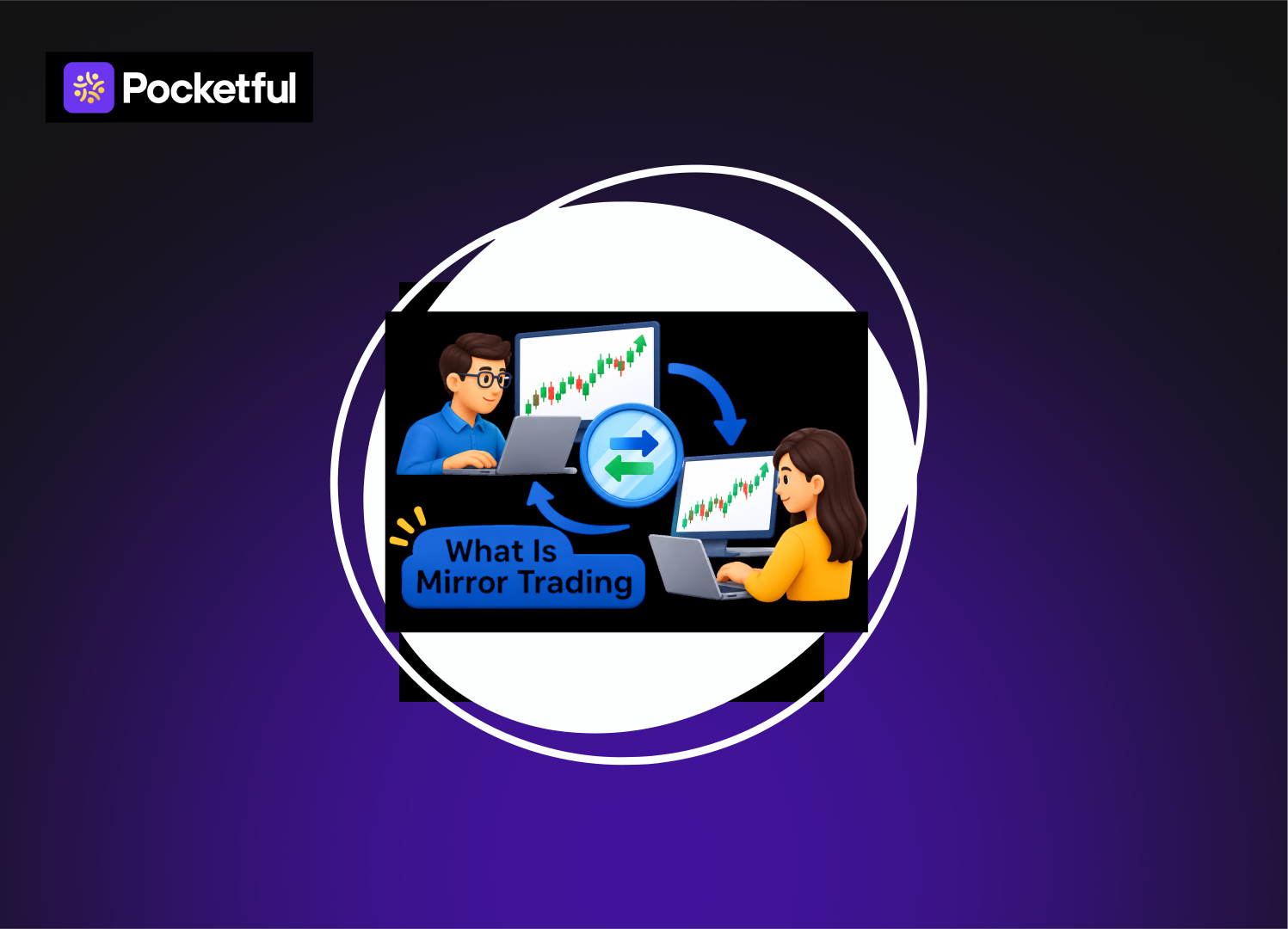
Imagine being able to follow a trading strategy without having to spend all day staring at charts or placing orders one by one – a pretty appealing idea behind the concept of mirror trading. A trader chooses the strategy or system they want to emulate, and then the platform does its best to replicate every trade signal, or transaction in their linked account.
This idea might sound great to beginners who don’t have a lot of time on their hands or are still figuring out how the markets work, but let’s not get ahead of ourselves here – copying a strategy does not automatically mean you’ll copy its success. A strategy that performs well in one market can lose money in another.
Understanding mirror trading, what a mirror account even is, and the risks involved in each mirror trade can at least make investors a little bit more informed before they jump in. Before you use a service like this, it’s worth asking yourself what exactly gets copied, how much control you have left, and who is actually responsible for managing all the risks.
What is Mirror Trading?
Mirror trading is a method of trading where all the transactions are automatically copied from a strategy you’ve chosen, or a signal provider, into another account of yours. It’s all about following a set plan, rather than having to make every trading decision all by yourself.
Depending on the platform, the strategy might be run by a fancy algorithm, some simple trading rules, or even just the trades of another trader. When that strategy produces a trading signal, the system then tries to place the same type of trade in the connected account.
Take for example a strategy that says buy a particular security when the price crosses a certain level. A mirror trading system might then try to place the same trade in the user’s account, provided they’ve got the right settings and enough cash on hand.
The specifics of how it all works can vary a bit from one provider to another. Some services will replicate individual trades, while others will follow the signals from an algorithm or a portfolio that’s been put together by someone else. And honestly, sometimes the terms ‘mirror trading’ and ‘copy trading’ are just used pretty loosely, so be aware that different platforms might define them a bit differently.
One thing to keep in mind: mirror trading automates the execution of a strategy, but it doesn’t magically make it a good idea.
How Does Mirror Trading Work ?
The process generally involves picking a strategy, linking in an account, and figuring out how to get the trades copied over. The options available to you depend on who you’re using.
1. Pick a strategy or signal provider
The user has a look at the strategies that are available on the platform and they can be pretty different from one another. Some might focus on trading a lot, while others might pick a very specific range of instruments, or take a very cautious approach.
Looking at past performance from a provider can give you a bit of an idea of how they do things but keep in mind that past results don’t necessarily mean future success. And don’t forget to take a close look at the period of time that results are based on, the size of any past losses, and whether or not the performance has been affected by trading costs.
2. Connect a trading account
Some services will let you link in an account you already have, while others will require you to open a new account with a specific provider.
Before you go and connect an account, double-check how the provider handles your cash and personal info, account permissions, and trade execution. Be very wary if they ask for your password, otp or full access to your account.
3. Configure Trades To Suit You
The amount of cash you can allocate to a strategy and the risk level you’re happy with can vary from service to service – and even how you cap the size of any replicated trades. These settings do make a difference, keep in mind. If a trade is copied into a smaller account, it may need to be scaled back – and you won’t always get an exact replica of the original position
4. Set up Trades to be Repeated Automatically
When the strategy kicks out a signal, the system tries to copy it over to the connected account. Sounds neat, but don’t get too excited – just because the system does it automatically doesn’t mean the trade will work out just the same. Market prices move, as do the funds in your account – and sometimes it’s just plain slow to get the job done on the linked account. So, don’t be surprised if the price of entry or exit is different in the copy
5. Keep An Eye on Performance and Stay on Top of Things
Just because you’ve automated the whole shebang doesn’t mean you can kick back and forget about the account. You should be keeping track of open positions, any losses, any charges that pop up, and changes in how the strategy is behaving. If the service provider changes its plans or the market becomes highly unpredictable, the actual outcome may be different from what you originally expected.
What is a Mirror Account?
A “mirror account” – its a bit of a misnomer actually – can refer to an account that replicates the trades of a particular strategy or another account, but the term is not used the same way by every financial platform.
Sometimes it means an account set up to follow another trader’s moves, while other times it might be an account set up to execute the signals from an automated strategy.
Do not assume that every platform using the term is giving you the same service. You’ve got to check out the product description, account permissions, fee structure, and order-execution rules before you sign up. It’s not a good idea to just take things at face value.
A mirror account is different from a bank account mirror, a duplicate account statement, or a basic portfolio-tracking feature. Each serves a different purpose.
What is a Mirror Trade?
A “mirror trade” is when a single transaction is copied from the strategy or signal source into the user’s account.
For example, imagine a strategy is telling you to buy 10 shares of a company. A linked account might then try to place a similar buy order but the actual order quantity might be different if you’ve configured a smaller allocation or the account hasn’t got enough cash in it.
The result might also be different because the original and replicated orders could be executed at different prices.
This is an important distinction to make when you’re checking the performance results. A strategy’s published results might not match the returns you actually get once you factor in brokerage, other charges, slippage, and execution differences.
What are the Advantages of Mirror Trading?
Mirror trading can be pretty convenient, but its usefulness depends on the actual service, the strategy, and your own understanding of the risks.
1. Less manual trading required
A mirror trading system can automate the execution of selected signals, meaning you don’t have to place every order yourself that can save you a lot of time on routine trading tasks.
Of course, automation doesn’t replace the need to understand the strategy, or keep an eye on your account.
2. A more structured trading approach
Some systems will follow some fairly strict rules for entries, exits, and position sizes which can help keep you from making impulsive decisions based on fear or excitement.
But, the quality of those rules is pretty key here. An automated system can execute a rubbish strategy just as well as a good one.
3. Exposure to different trading strategies
Some platforms will offer up strategies that use different instruments, trading frequencies, or market conditions which can be useful if you want to get a feel for how different systems work.
Just bear in mind that having access to several strategies doesn’t automatically create diversification – if they all rely on similar market conditions, they all will probably do badly at the same time.
4. Potential learning opportunities
By reviewing the trades generated by a strategy, you might be able to learn how its rules work – what kind of entry points and exits it’s using, how long it’s holding positions for, and how it responds to market movements.
This only really works well if the platform provides clear explanations. Blindly copying orders without understanding their purpose doesn’t teach you much at all.
Read Also: What Is Breakeven Point & How to Calculate It?
How to Start Trading Through Pocketful
If you want to trade, you can do it easily through a registered broker like Pocketful.
- Open a Demat and trading account with Pocketful.
- Complete the online KYC process.
- Add funds to your trading account.
- Search for commodities or stocks.
- Place your buy or sell order and track your trades through the platform.
Before trading, compare contract details, margin requirements, expiry dates, market liquidity, and price trends.
Mirror Trading: The Hidden Dangers You Need to Watch Out For
The biggest issue is that people often hand over too much control to a strategy or provider without ever really understanding how it works.
1. When the Strategy Goes Bad, You Go Bad Too
A strategy can be profitable for a while, then turn south. And guess what? You’re going to feel those losses too.
Don’t get me wrong – past performance is no guarantee of future success. Markets change and a strategy that worked in the past may stop working at any time.
2. The Problem With Lack of Control
Depending on the platform you’re using, you may have little to no influence over individual trades once you turn on automation.
And that can be a real problem when a trade starts to go the wrong way – or you want out quickly. Check and see if you can even pause replication, close out positions manually, or cut ties with the service.
3. Why Do the Numbers Never Add Up?
The original trader and your linked account aren’t going to get the same results. Execution prices, order sizes, timing, liquidity, and brokerage fees can all differ.
So, don’t take a strategy’s displayed returns as a given. It’s not a guarantee of what your account will actually earn.
4. What Are You Really Paying For?
Some of these services charge subscription fees, performance fees, or a whole host of other costs. And then, there are the brokerage fees and other statutory charges that add up.
Before you commit, understand how the provider makes money and whether their incentives are to get you to trade more (or take on more risk than you should).
5. When Tech Goes Wrong, You’re Suffering Too
Platform outages, failed orders, connection issues, or just plain old wrong settings can all stop a trade from being copied.
You need to know what happens when things go wrong and whether the platform will even give you a heads up.
6. Watch Out For Scams And Fake Gurus
If someone’s promising you guaranteed profits through mirror trading, you have every right to be skeptical. Scammers use fake testimonials, fancy-schmancy returns, and high-pressure sales tactics to get you to hand over your cash.
Don’t give out account passwords or OTPs to some supposed trading guru. Also, make sure to verify the provider and any intermediaries on your own before letting them get access to your account.
A Practical Checklist Before Starting Mirror Trading
Use this checklist to assess a service before committing money.
| Question | Why it matters |
|---|---|
| Can I verify the provider’s identity and regulatory status? | Helps reduce the risk of dealing with an unauthorised operator |
| Are historical results supported by clear records? | Makes it easier to assess how the strategy performed |
| What was the largest historical drawdown? | Shows the scale of past declines, although future losses may be larger |
| Are all charges disclosed? | Helps estimate the net result after costs |
| Can I pause or stop copying trades? | Clarifies how much control you retain |
| What happens if an order fails? | Reveals how the service handles operational problems |
| Can I afford to lose the allocated amount? | Helps prevent trading losses from affecting essential expenses |
Do not treat a completed checklist as proof that a strategy is safe. It is a screening tool to help identify unanswered questions and potential warning signs.
Read Also: Directional Trading Strategies: Overview, Types & Examples
Conclusion
Mirror trading lets you copy the trades of a selected strategy, which can save you a ton of time by not having to place all those orders yourself. But getting access to this feature through a mirror account can be a bit hit-or-miss, different platforms do it differently.
The main trade-off is convenience vs control. Sure, automated execution can save you time, but it can also end up making some pretty poor decisions, or cost you more than expected, or just behave in a way that’s different from what you were expecting from the original strategy.
Before you sign up with any provider, do some digging to make sure they’re legit, understand their rules, get a handle on what you might lose if things go wrong, and check whether their service is even allowed in India. And for goodness sake, don’t just choose a mirror trading service because it looks like it’s had a string of successful trades, that’s just not a good enough reason to trust it.
| S.NO. | Check Out These Interesting Posts You Might Enjoy! |
|---|---|
| 1 | Top 10 Intraday Trading Strategies & Tips for Beginners |
| 2 | Options Trading Strategies |
| 3 | Supply and Demand Trading Strategy |
| 4 | Best Option Selling Strategy in India |
| 5 | Delta Neutral Trading Strategy: What it is & How it works |
Frequently Asked Questions (FAQs)
01
What is mirror trading ?
Mirror trading is basically a way of copying the trades generated by a particular strategy or trading system. Depending on the platform, these trades get copied automatically into a linked account.
02
What is a mirror account all about?
A mirror account is what some platforms call an account that’s linked to a particular trading strategy or another account, so you can replicate the trades. The specifics of what it does and what features come with it can vary a fair bit between providers.
03
Is mirror trading going to make me rich?
Mirror trading can make you money or lose you money, it really depends on the strategy, the market conditions, how well the trades get executed, what fees you pay, and how well you manage your risk. Just because a strategy looked good in the past is no guarantee it’ll keep on looking good in the future.
04
What is the difference between mirror trading and copy trading?
They are both about automatically copying other people’s trades, but they are not always done in exactly the same way. Mirror trading might be following a set strategy or algorithm, while copy trading is often following another individual trader. But to be honest, the providers don’t always use these terms in a way that makes sense.
05
Can I just stop mirror trading if I change my mind later on?
It’s hard to say as it really depends on the provider, the instruments they are trading, and the regulations that apply. Do your research, be wary of anyone who promises you the world, and make sure it’s allowed for Indian residents before you go ahead and use it.
06
Is mirror trading safe to use in India?
It’s hard to say as it really depends on the provider, the instruments they are trading, and the regulations that apply. Do your research, be wary of anyone who promises you the world, and make sure it’s allowed for Indian residents before you go ahead and use it.
Disclaimer

The information shared in this content is intended solely for educational and informational purposes and should not be considered financial, investment, or trading advice. Any references to stocks, mutual funds, or market instruments are purely for informational purposes and do not constitute recommendations. Investments in financial markets are subject to market risks, and past performance is not indicative of future returns. Readers are advised to conduct independent research, review official documents carefully, and consult a qualified financial advisor before making any investment or trading decisions.
Article History