



| Type | Description | Contributor | Date |
|---|---|---|---|
 | Post created | Pocketful Team | Aug-11-26 |
Read Next
- How to Place an Order During CAS Window
- What is the Impact Cost in Trading?
- Stock Market Crash in India: History & Causes
- Fundamental Trading: A Beginner’s Guide
- What is MetaTrader 4 (MT4)?
- Types of Financial Instruments available for Trading in the Capital Market
- Importance Of Algo Trading In Futures And Options For Traders
- Convexity in Options Trading: Meaning, Benefits & Risks
- Best AI Trading Tools in India 2026: Top 5 Tools
- What Is Vega in Options? Meaning, Importance & Example
- Delta in Options: Meaning, Formula, Uses & Examples
- What is Commodity Pool Operator (CPO)?
- Best Penny Stock Trading Platforms, Brokers & Apps
- Bid Price and Ask Price: Key Differences
- What is After Hours Trading: Definition, Benefits & Risks
- Minimum Capital Required for Options Trading in India
- Trading Terminal: Meaning, Features, Types & Benefits
- MTF Charges vs Normal Trading Charges: Key Differences
- Slippage in Trading: Meaning, Types, Causes & How to Reduce It
- Types of Stock Market Orders Explained
How to use MTF Optimally?
Published on : 10th August 2026
|Updated on : 11th August 2026



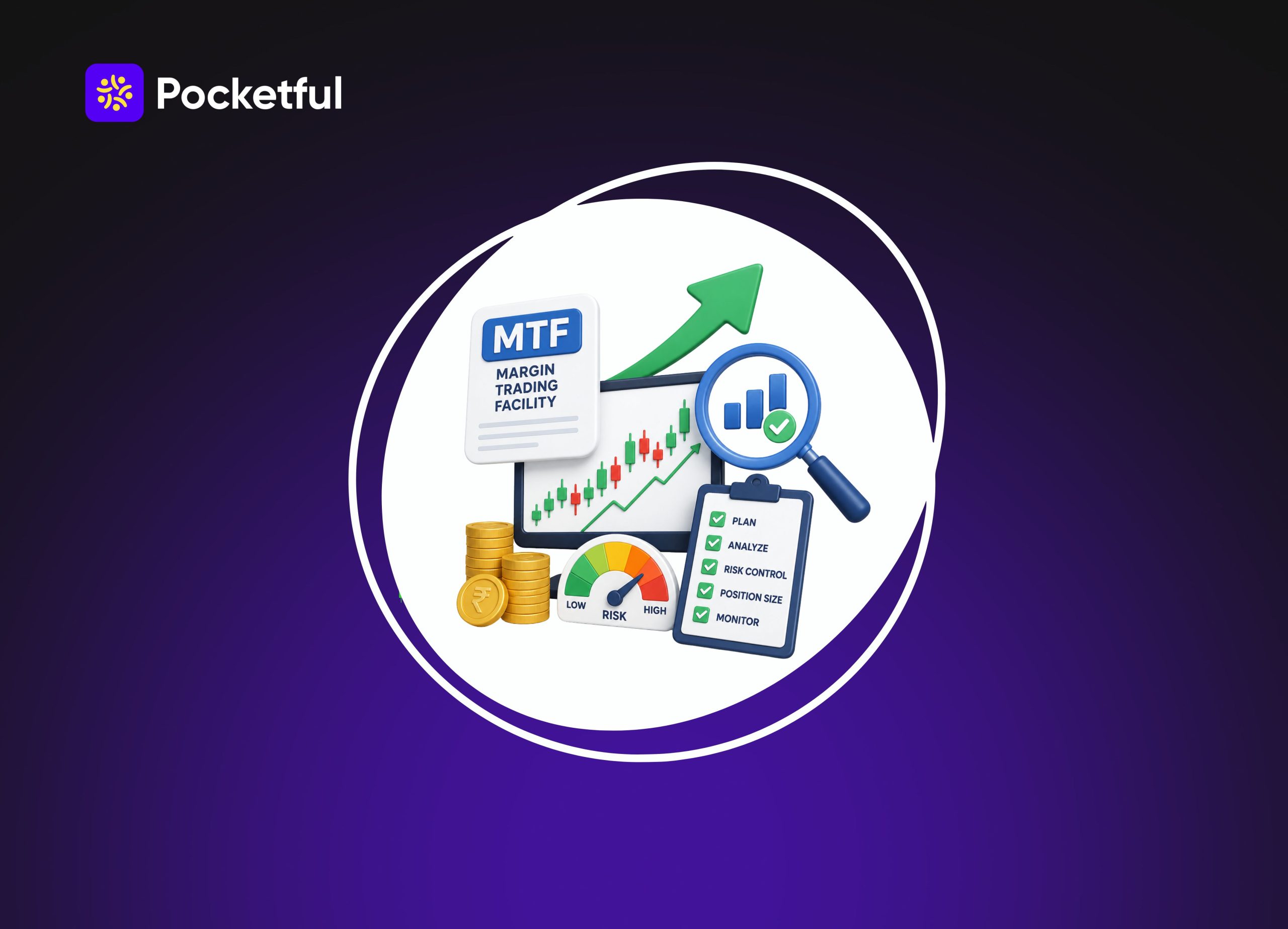
The stock market offers many great tools to help individuals grow their wealth over time. One such brilliant tool allows market participants to buy more shares than their current bank balance permits. By paying a very small portion upfront, investors can easily increase their purchasing capacity. This method requires careful planning and a clear understanding of all associated costs. When applied smartly, it acts as a strong bridge between limited capital and larger market opportunities for everyday traders.
What is MTF?
MTF stands for Margin Trading Facility. It is a special service provided by stockbrokers to their registered clients. This service allows investors to purchase shares by paying only a portion of the total investment upfront. The stockbroker happily funds the remaining balance for the entire trade.
For instance, if an individual wants to buy shares worth Rs 1,00,000 but only has Rs 25,000, the broker will provide the remaining Rs 75,000. The shares bought are kept safe as collateral until the borrowed amount is paid back in full. It functions very much like a short-term loan for purchasing specific stocks. In the regular stock market, this facility serves a very similar purpose by amplifying a trader’s overall market exposure.
To understand it better, a simple comparison can be made with normal trading.
| Feature | Regular Delivery Trading | Margin Trading Facility |
|---|---|---|
| Capital Required | Full amount must be paid upfront | Only a small fraction is required |
| Risk Level | Generally lower risk | Higher risk due to borrowed funds |
| Interest Charges | Zero interest is charged | Interest is charged daily on borrowed funds |
| Purchasing Power | Limited to available bank balance | Considerably amplified purchasing power |
Why MTF is Important for Traders
Traders find this facility highly beneficial for several practical reasons. It helps them capture big market movements without needing large amounts of ready cash. The tool opens up new doors for capital efficiency.
- Higher Purchasing Power: Traders can easily increase their trade size. This means a small amount of capital can control a very large number of shares. It is highly useful when traders spot a great opportunity but lack full funds.
- Ideal for Short-Term Trades: It is very useful for short-term or swing trading. Traders can take advantage of quick price movements without waiting to gather full funds from other sources.
- Portfolio Protection: Investors do not need to sell their existing long-term holdings to fund new trades. They can keep their old investments safe and still participate in new market trends.
- Flexible Repayment Options: Unlike intraday trading where positions close on the same day, this facility allows traders to hold their shares for multiple days or weeks. This takes away the intense pressure of same-day market closing times.
- Regulated and Secure: The whole process runs completely under the strict rules of the market regulator. This makes the entire system very transparent and highly secure for everyday participants.
MTF on Pocketful
Pocketful makes margin funding more accessible, helping eligible investors trade with greater flexibility and convenience. The platform focuses on keeping costs low and transparency high.
- Low Interest Rates: Pocketful offers a highly competitive interest rate in the market. It starts at just 5.99 percent per annum for funded amounts up to Rs 1,00,000. This keeps the overall borrowing cost very low.
- High Buying Power: The platform offers up to 4x to 5x margin to its active users. This allows traders to purchase shares worth more than their available capital, significantly increasing their trading capacity.
- Instant Pledging: The system allows for quick and easy pledging of shares via CDSL. This ensures trades are executed instantly without any unnecessary delays.
- Single Screen Experience: Traders can access stock charts, order placements, and margin details all on one simple screen. This makes daily navigation very easy for beginners.
- Zero Delivery Brokerage: The platform also offers zero brokerage on regular delivery trades. This adds to the overall savings for long-term investors.
| Pocketful Feature | Important Details |
|---|---|
| Interest Rate | Starts at 5.99 percent per annum |
| Available Leverage | Up to 4x on selected approved stocks |
| Setup Process | Completely digital and paperless via DDPI |
| Equity Brokerage | Zero delivery brokerage charges |
Key Conditions for MTF Holdings
Using this service involves certain strict rules set by the market regulator. It is essential to understand how to use the service and the rules that govern it to avoid unexpected losses. Using margin trading facility leverage optimally requires great discipline and continuous monitoring.
- Initial Margin Contribution: Market rules state that a trader must put in a minimum of 25 percent of the total trade value. The broker can fund a maximum of 75 percent of the trade. This rule ensures traders have some skin in the game.
- Approved Stocks Only: Brokers only offer this facility on specific highly liquid stocks. These are usually strong, large-cap companies approved by the exchange. Penny stocks and highly volatile shares are generally excluded to protect traders.
- Holding Coverage Ratio: The safety of a margin position is measured by the Holding Coverage Ratio. If the stock price falls, the overall portfolio value drops. Traders must keep a close watch on this safety ratio daily.
- Auto Square-Off Rules: When the margin falls below a set minimum level, the broker issues a margin call. If the trader fails to add more funds, the broker will automatically sell the shares to recover the money. This automatic selling is known as an auto square-off.
- Daily Interest Accrual: Brokers charge interest on the specific amount they lend to the trader. This interest is calculated daily and continues until the borrowed money is fully returned. This daily cost must be factored into the final trade plan.
Holding Period of MTF in Pocketful
Many traders wonder about the exact time limit for keeping a margin position open. Pocketful offers a highly flexible approach for its active users. This flexibility allows for better trade planning.
- No Fixed End Date: There is no maximum holding period mandated by the market regulator. Traders can technically hold their leveraged positions for as long as they want. This gives great freedom to plan an optimal exit strategy.
- Continuous Margin Maintenance: The position remains active only if the required margin level is strictly maintained. A sudden drop in margin will immediately trigger alerts. Traders must respond to these alerts very quickly.
- Timely Interest Payments: The accrued interest on the borrowed funds must be paid regularly by the trader. This keeps the trading account in good standing. Delaying these payments can lead to forced selling.
- Stock Eligibility Tracking: The purchased stock must remain on the broker’s approved list. If a stock is later removed from this list, the trader might have to close the position. It is very wise to check the approved list often.
How Can Traders Use MTF Effectively
Smart planning separates successful market participants from those who suffer frequent losses. Applying the right tactics ensures that the borrowing costs do not outweigh the actual trading profits. A systematic approach is highly recommended.
- Convert Winning Trades to Delivery: If a stock performs well and looks promising for the long term, traders can pay the remaining balance to the broker. Converting the trade to a delivery position completely stops the daily interest charges.
- Always Use Stop-Loss Orders: Margin amplifies both profits and losses equally. Placing a strict stop-loss helps limit downside risk immediately. It successfully prevents severe margin calls during sudden market drops.
- Calculate Costs Beforehand: It is vital to estimate the exact interest charges before entering any trade. The stock’s expected return must be higher than the borrowing cost to make a net profit. Pocketful provides a handy online calculator for this specific purpose.
- Maintain a Buffer Margin: Traders should not utilize their entire available capital on a single trade. Keeping extra funds in the account provides a strong cushion against normal daily price fluctuations.
- Focus on Liquid Stocks: Sticking to large and stable companies reduces the risk of sudden price crashes. These reliable stocks move predictably and are much easier to sell when required.
- Monitor Positions Daily: Active monitoring is highly crucial for all leveraged trades. Stock prices change very fast in volatile markets. Traders must stay informed about their portfolio health every single day to avoid negative surprises.
Conclusion
The option to borrow funds for stock market purchases is a practical method to maximize available resources. It provides a helpful pathway for market participants to expand their trading footprint without tying up all their cash reserves. Success heavily relies on disciplined risk management, regular monitoring, and a clear understanding of daily costs.
By maintaining proper margins and setting strict exit plans, individuals can navigate the financial markets smoothly. A thoughtful and educated approach transforms this facility into a highly effective instrument for sustainable wealth building. The key is to remain patient, informed, and well-prepared for any market condition.
Frequently Asked Questions (FAQs)
01
What does leverage mean in margin trading?
Leverage lets you use borrowed funds to increase buying power. With 4x leverage, you can buy shares worth Rs 1,00,000 using just Rs 25,000 of your own capital.
02
Is it risky to trade on margins?
Yes. While it amplifies profits, it also magnifies losses if the stock price moves against you. It requires careful planning and a good understanding of market volatility.
03
How is interest calculated?
Brokers charge daily interest only on the specific amount they lend you, not the total trade value. This continues as long as your position remains open.
04
Can I buy any stock using margin?
No. Brokers allow this facility only on specific approved stocks, which are generally strong and highly liquid companies.
05
What happens if the stock price falls?
Your portfolio value drops. If it falls below a safety level, your broker issues a margin call asking for more funds. Otherwise, they may automatically sell your shares to recover their money
Disclaimer

The information shared in this content is intended solely for educational and informational purposes and should not be considered financial, investment, or trading advice. Any references to stocks, mutual funds, or market instruments are purely for informational purposes and do not constitute recommendations. Investments in financial markets are subject to market risks, and past performance is not indicative of future returns. Readers are advised to conduct independent research, review official documents carefully, and consult a qualified financial advisor before making any investment or trading decisions.
Article History