



| Type | Description | Contributor | Date |
|---|---|---|---|
 | Post created | Pocketful Team | Aug-31-26 |
Read Next
- How to Place an Order During CAS Window
- What is the Impact Cost in Trading?
- Stock Market Crash in India: History & Causes
- Fundamental Trading: A Beginner’s Guide
- What is MetaTrader 4 (MT4)?
- Types of Financial Instruments available for Trading in the Capital Market
- Importance Of Algo Trading In Futures And Options For Traders
- Convexity in Options Trading: Meaning, Benefits & Risks
- Best AI Trading Tools in India 2026: Top 5 Tools
- What Is Vega in Options? Meaning, Importance & Example
- Delta in Options: Meaning, Formula, Uses & Examples
- What is Commodity Pool Operator (CPO)?
- Best Penny Stock Trading Platforms, Brokers & Apps
- Bid Price and Ask Price: Key Differences
- What is After Hours Trading: Definition, Benefits & Risks
- Minimum Capital Required for Options Trading in India
- Trading Terminal: Meaning, Features, Types & Benefits
- MTF Charges vs Normal Trading Charges: Key Differences
- Slippage in Trading: Meaning, Types, Causes & How to Reduce It
- What Is Cash Trading? Meaning, How It Works & Benefits
Types of Stock Market Orders Explained
Published on : 31st August 2026
|Updated on : 31st August 2026



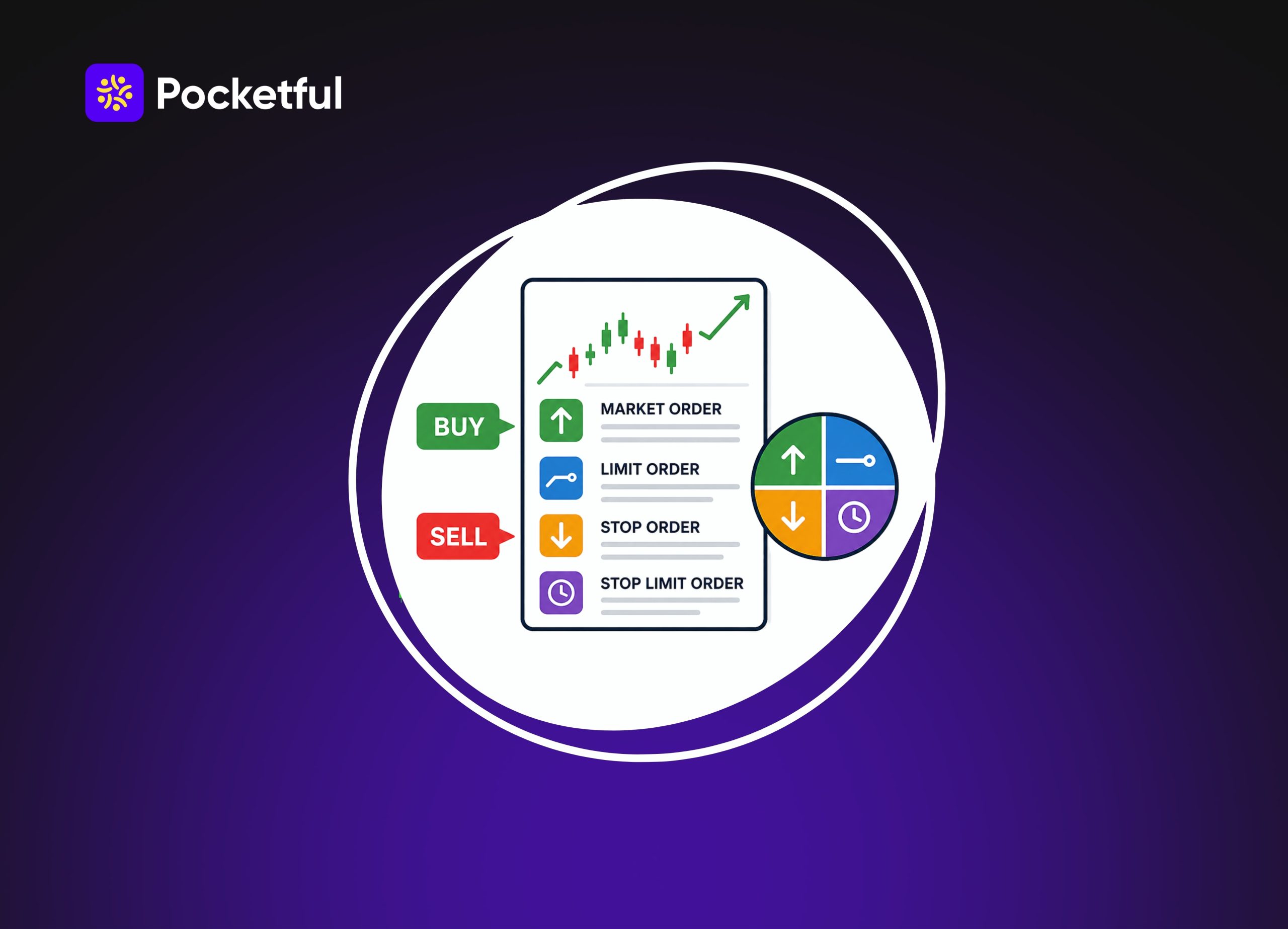
If you have just started trading in the Indian stock market, chances are you have clicked buy or sell without thinking about how that order gets executed.
As a beginner, once you start trading frequently, understanding the different types of orders in the stock market becomes important. Otherwise, your trade will slip away in seconds. If you are placing an order, the order type you pick decides how, when, and at what price your transaction goes through.
Let us break this down properly in today’s blog.
Why do we need Types of Order?
The movement in the Indian stock market is high. Prices can shift by a rupee or two within seconds, especially for volatile stocks or during results season.
A well-chosen order type protects you from bad fills, helps you lock in profits, and can even save you from panic-selling at the worst possible moment.
Indian brokers today, like Zerodha, Groww, Upstox, and Pocketful, all offer similar types of order in the stock market on their trading apps.
The names might look slightly different in the UI, but the core mechanics remain the same. So once you understand these basics, you can apply them anywhere.
Types of Orders in the Stock Market
1. Market Order
This is the very commonly used order type, especially by beginners. It tells your broker: “Buy or sell this stock right now, at whatever price is currently available.”
Your order gets executed almost instantly because you do not wait for a specific price; instead, you accept the best available one. This works great for highly liquid stocks.
However, for stocks with low trading volume, market orders can lead to slippage, i.e., you might end up buying at a higher price (or selling at a lower price) than you expected. So while market orders are convenient, they are not always the smartest choice.
2. Limit Order
A limit order lets you set the exact price at which you are willing to buy or sell a stock. If you want to buy ABC shares only if the price drops to ₹1,450, you place a limit buy order at that price. The order will only execute if the market reaches your specified level.
You have full control over your entry and exit price. Also, there is no guarantee your order will get filled. If the stock never touches your limit price, your order simply sits there unexecuted.
Traders who like to plan their entries carefully, buying on dips or selling at resistance levels, rely heavily on limit orders.
3. Stop-Loss Order
If there is one order type every Indian trader should master, it is the stop-loss order. The primary objective of this order type is to protect you from big losses. You set a trigger price, and once the stock hits that level, your stop-loss order converts to a market order and gets executed automatically.
Say you bought shares of XYZ at ₹950, and you do not want to lose more than ₹30 per share. You will set a stop-loss at ₹920. If the price falls to that level, your shares get sold automatically
This is a lifesaver for intraday and F&O traders, where price swings can be brutal. Decision-making based on your emotions is one of the biggest reasons traders lose money, and a stop-loss removes that emotional element entirely.
There are two types of Stop-Loss orders: Stop-Loss Market Order and Stop-Loss Limit Order.
4. Bracket Order
This order type is particularly popular among intraday traders in India. A bracket order combines three orders into one: your entry order, a target order, and a stop-loss order; all placed simultaneously.
So the moment your entry order executes, the system automatically places both a target order and a stop-loss order. If the stock hits your target, you book profit. If it falls to your stop-loss, you exit with limited damage. Either way, one of the two orders cancels the other automatically once triggered; that is the bracket part.
5. Cover Order
A cover order is similar to a bracket order but simpler. It pairs your entry order with a compulsory stop-loss order. There is no target order involved here. The idea is to give traders extra leverage for intraday positions while ensuring there is always a safety net in place.
Most brokers offer higher margin (leverage) on cover orders because the mandatory stop-loss reduces the platform’s risk exposure. It is a decent option if you want more buying power while still having protection against losses.
6. Good Till Triggered Order (GTT)
In a GTT order, you can set a trigger price for a stock, even weeks in advance, and the order stays active until either it is triggered or you cancel it manually.
Let us say you are eyeing a stock at ₹500, but it is currently trading at ₹560. Instead of checking the price every single day, you set a GTT buy order at ₹500. The moment the stock touches that price, your order executes.
This is incredibly useful for long-term investors who track specific entry or exit points without wanting to actively monitor the markets daily.
7. After-Market Order (AMO)
Indian markets are open between 9:15 AM and 3:30 PM, but that does not mean your trading decisions have to wait until the next morning. After-market orders let you place buy or sell orders after trading hours, in the evening or early morning before the market opens.
These orders get queued and executed as soon as the market opens the following session, based on the opening price and available liquidity. It is a good tool for people who plan their trades after work hours.
Read Also: Market Order Vs Limit Order: What’s the Difference?
How to Choose the Right Order in the Stock Market?
The stock order type you use depends on what kind of trader you are.
If you are a long-term investor who does not mind waiting for the right price, limit orders and GTT orders will be more useful for you
If you are into intraday trading, bracket orders and cover orders offer built-in risk management that can save your capital on volatile days.
If speed matters more than price, say, during a breaking news event, market orders will be the best to use.
Conclusion
Once you start understanding order types, do not try to memorise all seven types. You will forget half of them by tomorrow anyway. Start with the market and limit orders because you will use these two the most, in almost every single trade. Once buying and selling feels comfortable, add a stop-loss into the mix.
So many traders learn this after watching a stock crash 8% overnight with no safety net in place. Bracket orders, cover orders, GTT, AMO can wait till you are placing enough trades to need them.
None of this is complicated once you learn. And in a market that moves as fast as ours, having this kind of clarity puts you ahead of a lot of traders.
| S.NO. | Check Out These Interesting Posts You Might Enjoy! |
|---|---|
| 1 | Different Types of Trading in the Stock Market |
| 2 | Order Book Explained: How It Works and Its Importance |
| 3 | What Is an After Market Order (AMO)? Meaning, Timing & How It Works |
| 4 | What is Overnight Trading? |
| 5 | What is a good rule for investing in stocks? |
Frequently Asked Questions (FAQs)
01
Which order type should a beginner start with?
Limit orders to pre-define what price you are getting, or market orders if you are confident about the next movement.
02
Should I always add a stop-loss after buying a stock?
It is a good habit. A lot of traders skip. Setting the stop-loss just takes that risk off the table.
03
Are GTT orders only for long-term investors?
If you have got a price in mind and do not want to check the app every hour, GTT does that watching for you.
04
What if my After Market Order does not work?
It can happen sometimes, especially if there is a big gap between your price and where the stock opens the next day. Just check your order status once the market opens instead of assuming.
05
Do all brokers offer the same order types?
Yes. Pocketful, along with most other Indian platforms, gives you the same core set, market, limit, stop-loss, bracket, cover, GTT, AMO. Layout might differ a little from app to app.
Disclaimer

The information shared in this content is intended solely for educational and informational purposes and should not be considered financial, investment, or trading advice. Any references to stocks, mutual funds, or market instruments are purely for informational purposes and do not constitute recommendations. Investments in financial markets are subject to market risks, and past performance is not indicative of future returns. Readers are advised to conduct independent research, review official documents carefully, and consult a qualified financial advisor before making any investment or trading decisions.
Article History