



| Type | Description | Contributor | Date |
|---|---|---|---|
 | Post created | Pocketful Team | Aug-25-26 |
Read Next
- How to Place an Order During CAS Window
- What is the Impact Cost in Trading?
- Stock Market Crash in India: History & Causes
- Fundamental Trading: A Beginner’s Guide
- What is MetaTrader 4 (MT4)?
- Types of Financial Instruments available for Trading in the Capital Market
- Importance Of Algo Trading In Futures And Options For Traders
- Convexity in Options Trading: Meaning, Benefits & Risks
- Best AI Trading Tools in India 2026: Top 5 Tools
- What Is Vega in Options? Meaning, Importance & Example
- Delta in Options: Meaning, Formula, Uses & Examples
- What is Commodity Pool Operator (CPO)?
- Best Penny Stock Trading Platforms, Brokers & Apps
- Bid Price and Ask Price: Key Differences
- What is After Hours Trading: Definition, Benefits & Risks
- Minimum Capital Required for Options Trading in India
- Trading Terminal: Meaning, Features, Types & Benefits
- MTF Charges vs Normal Trading Charges: Key Differences
- Slippage in Trading: Meaning, Types, Causes & How to Reduce It
- Types of Stock Market Orders Explained
What Is an After Market Order (AMO)? Meaning, Timing & How It Works
Published on : 25th August 2026
|Updated on : 4th September 2026



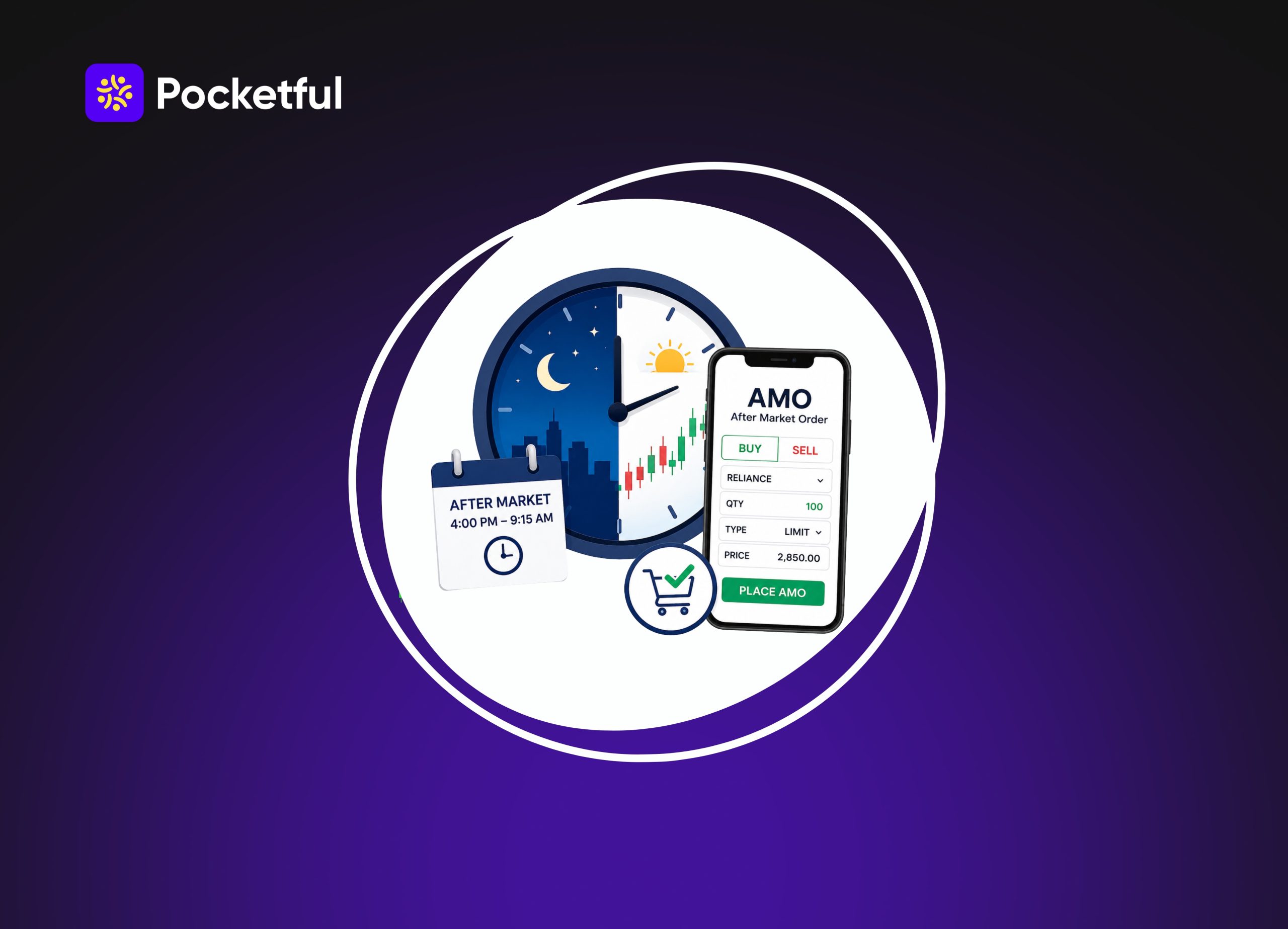
Markets shut at a fixed time every day, but decisions to buy or sell a stock don’t stop just because the exchange closed. An after market order lets you place that decision anyway, queued and ready to fire the moment trading resumes. This guide covers exactly what an AMO is, how the timing and execution actually work, and the specific status messages you’ll see along the way.
What Is an After Market Order?
AMO full form stands for After Market Order, an order placed once regular trading hours have ended, held by your broker, and executed either during the next pre-open session or once the market opens the following trading day.
After market order functionality exists specifically for people who can’t watch the market in real time but still want to act on a decision made after hours, over the weekend, or during a trading holiday.
AMO order means that an order for after-market execution is being placed and worked upon. Understanding that distinction upfront avoids the most common confusion beginners run into with this feature.
How Does an AMO Actually Work?
An After Market Order follows a simple process:
- Place the AMO: Enter your buy or sell order after regular market hours.
- Broker holds the order: The broker keeps your AMO in its system until orders can be sent to the exchange.
- Order reaches the exchange: The AMO is submitted to the exchange during the broker’s specified processing window on the next trading day.
- Order gets executed: A market order executes at the available market price. A limit order executes only if your specified price is available.
- Check the order status: If the conditions are not met, the order may remain pending or be cancelled based on its validity and exchange rules.
Understanding the “AMO Req Received” Status
After placing an order, most trading apps show a status message confirming what happened to it. AMO req received meaning, in plain terms, is simply confirmation that your broker’s system has successfully logged your after-market order and it’s now sitting in queue, waiting for the next trading session to begin.
Seeing AMO req received does not mean your order has executed. It only confirms the order was accepted into the queue. The actual execution, or a rejection if something’s wrong with the order, happens separately once the pre-open or regular session starts. If you don’t see any status update after this stage by the time the market opens, that’s usually a sign to check your order book directly rather than assuming everything went through.
AMO Timings by Segment
Timings vary depending on which exchange and segment you’re placing an order in.
| Segment | AMO Window |
|---|---|
| Equity (NSE & BSE) | 3:45 PM to 8:58 AM next day |
| F&O | 3:45 PM to 9:10 AM next day |
| Currency | 5:00 PM(or 3:45 PM to 8:59 AM next day depending on broker) |
| MCX (Commodity) | Available during regular market hours |
The pre-open session itself runs from 9:00 AM to 9:07 AM. Orders that match a price within that window execute there. Anything unmatched carries into the 9:15 AM market open.
A Simple Example
Say you decide at 4:00 PM, after the market has closed, that you want to buy 100 shares of a company at ₹50 per share. You place a limit AMO at that price. The order sits with your broker overnight. The next morning, if a matching price of ₹50 appears during the 9:00 to 9:07 AM pre-open window, your order executes right there. If it doesn’t match during that window, it carries forward and executes at the 9:15 AM open instead, at whatever price becomes available.
Read Also: What is Overnight Trading?
Benefits of Using AMO
If you are a trader in the market, then here are a few things that you should know about using the AMO in terms of the benefits.
- Trade Without Watching the Market Live: You can place an order in the evening, over a weekend, or on a holiday, without needing to be online the moment the market opens.
- Modify Orders After Placing Them: An AMO isn’t locked in the moment you submit it. You can typically revise the price or quantity any time before it executes.
- Works Across Multiple Segments: Equity, F&O, currency, and commodities all support AMO placement, so it’s not limited to plain stock purchases.
- Available Even on Non-Trading Days: You can queue an AMO on a weekend or a market holiday, and it simply waits until the next actual trading session to process.
Limitations and Risks of AMO
While using AMO is pretty simple, there are certain limitations that you should know of. The following are the risks to take care of:
- Liquidity Can Be Thin at Execution: Lower trading volume during the pre-open window can make it harder to get your full order filled exactly as placed.
- Overnight News Can Move the Price: A significant announcement after you place your AMO can shift the stock’s price sharply by the time your order actually executes, sometimes to a level you wouldn’t have chosen in real time.
- Certain Order Types Aren’t Supported: Bracket, cover, and stop-loss orders cannot be placed as an AMO, limiting your options compared to trading during live market hours.
- Rejection Risk Is Higher Than Regular Orders: Volatility and thinner liquidity outside normal hours raise the chance of an order failing to execute as intended.
Common Reasons AMO Orders Get Rejected
- Insufficient Funds or Securities: Your account needs enough margin to buy, or enough shares available to sell, at the time the order is actually processed, not just when you placed it.
- Price Outside the Allowed Range: If the opening price doesn’t reach your specified limit, or falls outside a broker-imposed range for AMO orders, the order won’t execute.
- Market Orders Disallowed on Certain Instruments: Brokers or exchanges sometimes block market-type AMOs on illiquid stocks or index options to prevent extreme price swings.
- Stock Under Surveillance or F&O Ban: Orders on stocks currently under exchange surveillance, or in an F&O ban period, can get rejected outright.
- Technical or Timing Errors: Placing an AMO during a scheduled system maintenance window, entering a quantity that doesn’t match the lot size, or hitting a broker-specific restriction can all cause rejection.
AMO vs Other Order Types
| Order Type | Key Difference From AMO |
|---|---|
| Regular Market Order | Placed and executed during live market hours, with typically better liquidity |
| Good Till Triggered (GTT) | Stays valid for up to a year and can be placed anytime, but only executes during market hours, unlike an AMO which is valid for a single session |
| One-Cancels-Other (OCO) | Involves two linked legs where one cancels the other on trigger, a structure not available within an AMO |
Who Should Use an AMO
AMOs suit investors and traders who can’t monitor the market constantly during live hours but still want their orders ready the moment trading resumes. They’re less useful for intraday traders or scalpers, who need to react to price movement in real time rather than queuing a decision made the night before.
Best Practices Before Placing an AMO
While there are no key guidelines of the right things, following some simple steps can ensure that you end up in proper usage of AMO.
- Check Price Charts and News Beforehand: Review recent price action and any pending news that could affect the stock overnight before setting your price.
- Set a Realistic Limit Price: A limit set too far from the likely opening price may simply never execute, while one too close to the current price increases the odds of a fill you’re comfortable with.
- Confirm Execution the Next Morning: Check your order book once the market opens to confirm whether your AMO actually executed, rather than assuming it went through automatically.
Read Also: Pre-Open Market Session in India
Final Thoughts
An after market order is a genuinely useful tool once you understand its mechanics: it queues your decision, not your execution, and the price you get depends on what happens during the next pre-open or market-open session, not the moment you placed the order.
Know your segment’s specific timing window, stick to limit and market order types since that’s all AMO supports, and always confirm execution status the next morning rather than assuming it went through. Pocketful supports AMO placement across equity and F&O with the same app you use for live trading, so queuing an order after hours takes no extra steps.
| S.NO. | Check Out These Interesting Posts You Might Enjoy! |
|---|---|
| 1 | 20 Things to Know Before the Stock Market Opens |
| 2 | What Is the Turtle Trading Strategy? |
| 3 | 5 points to be considered before buying or selling any stocks |
| 4 | What Is Day Trading and How to Start With It? |
| 5 | What is a good rule for investing in stocks? |
Frequently Asked Questions (FAQs)
01
What does AMO full form stand for?
AMO stands for After Market Order. It is an order placed after regular trading hours that gets executed during the next pre-open session or market open.
02
What does “AMO Req Received” mean after I place an order?
It confirms your broker has accepted your after-market order into its queue. It does not mean the order has executed yet, execution happens separately once the next trading session begins.
03
Can I place a stop-loss order as an AMO?
No. Only limit and market order types are supported for AMO placement. Bracket, cover, and stop-loss orders cannot be queued as after market orders.
04
What happens if my AMO price isn’t matched during pre-open?
It carries forward automatically and gets executed during the regular market open at 9:15 AM, at whatever price is available then, unless it fails to match your limit price entirely.
05
Can I modify or cancel an AMO after placing it?
Yes, most brokers allow you to modify the price or quantity, or cancel the order entirely, any time before it actually executes the next trading session.
Disclaimer

The information shared in this content is intended solely for educational and informational purposes and should not be considered financial, investment, or trading advice. Any references to stocks, mutual funds, or market instruments are purely for informational purposes and do not constitute recommendations. Investments in financial markets are subject to market risks, and past performance is not indicative of future returns. Readers are advised to conduct independent research, review official documents carefully, and consult a qualified financial advisor before making any investment or trading decisions.
Article History