



| Type | Description | Contributor | Date |
|---|---|---|---|
 | Post created | Pocketful Team | Sep-04-26 |
Read Next
- How to Place an Order During CAS Window
- What is the Impact Cost in Trading?
- Stock Market Crash in India: History & Causes
- Fundamental Trading: A Beginner’s Guide
- What is MetaTrader 4 (MT4)?
- Types of Financial Instruments available for Trading in the Capital Market
- Importance Of Algo Trading In Futures And Options For Traders
- Convexity in Options Trading: Meaning, Benefits & Risks
- Best AI Trading Tools in India 2026: Top 5 Tools
- What Is Vega in Options? Meaning, Importance & Example
- Delta in Options: Meaning, Formula, Uses & Examples
- What is Commodity Pool Operator (CPO)?
- Best Penny Stock Trading Platforms, Brokers & Apps
- What is After Hours Trading: Definition, Benefits & Risks
- Minimum Capital Required for Options Trading in India
- Trading Terminal: Meaning, Features, Types & Benefits
- MTF Charges vs Normal Trading Charges: Key Differences
- Slippage in Trading: Meaning, Types, Causes & How to Reduce It
- Types of Stock Market Orders Explained
- What Is Cash Trading? Meaning, How It Works & Benefits
Bid Price and Ask Price: Key Differences
Published on : 4th September 2026
|Updated on : 4th September 2026



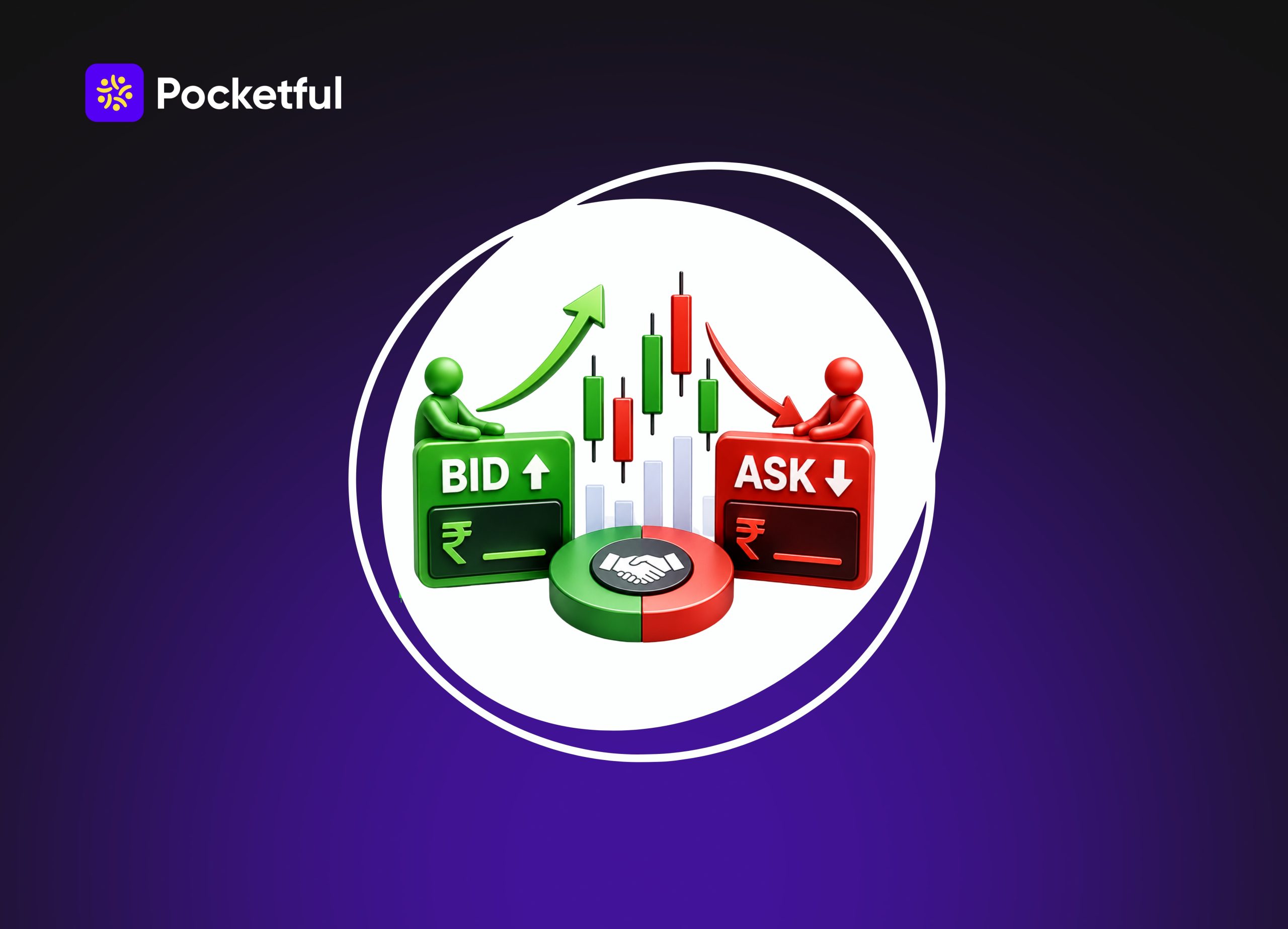
Open any stock’s live quote and two numbers stare back at you. One is what buyers want to pay. The other is what sellers want to get. Together, bid price and ask price decide exactly what happens when you place an order, and most beginners never really learn what these two numbers actually mean until they get a fill price they didn’t expect.
What is Bid Price?
Bid price is the highest amount a buyer is currently offering for a stock. It is the amount that is quoted at the top of the buying queue. Every time a new buyer offers more than the current bid, the bid price moves up to match. Place an order below the market price, and it joins this queue, waiting for a seller to accept it.
What is Ask Price?
Ask price is the lowest amount a seller is willing to accept right now for selling the shares that he holds. It sits at the front of the sell queue and is on the opposite side of the bid. Sellers who want out fast often drop this number so that the buyer will accept the bid and buy the shares from them. This is where the seller undercuts others in the same category.
What is the Difference Between Bid Price and Ask Price?
Bid prices come from buyers. The ask price comes from sellers. That’s the core difference, and everything else follows from it. Buy instantly, and you pay the ask. Sell instantly, and you get the bid. The gap between the two is called the spread, and it works against you the moment you buy and try to sell right back.
| Bid Price | Ask Price | |
|---|---|---|
| Set by | Buyers | Sellers |
| Also known as | Buy price | Offer price |
| Usually | Lower | Higher |
| Matters most when | You are selling | You are buying |
How Do Bid Price and Ask Price Work in the Market?
Bid and ask prices update constantly as buyers and sellers place and cancel orders throughout the trading session. Every stock has a live order book behind the quote you see.
1. The Bid Side
This shows every price level where buyers are waiting and how much quantity sits at each level. More buyers stacking near the top usually means more demand.
2. The Ask Side
This shows sellers waiting to offload shares, stacked from the lowest ask upward. This is the opposite of the bid, as mentioned earlier as well.
How a Trade Actually Happens
A trade fires the moment a bid and an ask match. Say a stock shows a bid of ₹340. Now the ask for the same is at ₹342. A new buyer steps in, willing to pay ₹341, and a seller accepts. The trade clears at ₹341, right there, and the quote resets with fresh numbers on both sides. This repeats constantly on active stocks, which is why prices barely sit still during market hours.
What is the Bid-Ask Spread?
The bid-ask spread is simply the gap between the ask price and the bid price. Smaller spreads usually mean a stock trades often and easily. Wider spreads usually mean the opposite: thin trading and less liquidity.
How to Calculate It
Bid-Ask Spread = Ask Price – Bid Price
Take a stock with a bid of ₹620 and an ask of ₹624. The spread is ₹4. Buy that stock right now, and you’re already ₹4 behind the moment you had try to sell it back.
Read Also: What is a Bid-Ask Spread?
Why Does the Bid-Ask Spread Matter?
The spread is a real, immediate cost. It is not a fee your broker charges, but it hits your return just the same, since buying at the ask and selling at the bid means you are giving up that gap automatically.
- Wide spreads cost more to enter and exit a position
- Tight spreads usually signal an actively traded stock
- Frequent traders and large orders feel this cost far more than someone buying and holding for years
What Factors Push Bid and Ask Prices Around?
A handful of things move these numbers throughout the day, some obvious, some less so.
| Factor | Effect |
|---|---|
| Trading volume | Higher volume usually narrows the spread |
| Volatility | Sharp price swings tend to widen it |
| News or earnings | Can shift both prices within seconds |
| Liquidity | Thinly traded stocks show wider gaps |
It is important to understand that the bid and ask prices are driven by the market forces of demand and supply. Any sudden announcement linked to earnings, rate decisions, or even any rumor can shift the bid and the ask price greatly. Therefore, you should keep an eye on the news, company, and market trends when considering the bid and ask price.
Where Can You Actually See Bid and Ask Prices?
Every trading app shows these numbers, usually right next to each other on the stock’s quote screen, often alongside the quantity waiting at each price.
- Trading apps: Pocketful and most other brokers show live bid and ask directly on the order page, no extra clicks needed.
- Exchange websites: NSE and BSE publish real-time quotes for every listed stock.
- Market depth window: This shows several bid and ask levels stacked together, not just the single best price on each side.
- News tickers and terminals: Often flash bid and ask alongside the last traded price during market hours.
Checking market depth before placing an order can help you understand the right price to quote. This will give you a clearer idea, which helps you to avoid overbuying and underselling as well.
Indian exchanges run on an order-matching system where both the bid and ask conditions are taken into consideration. Buyers and sellers rarely agree on the exact same number, and the difference is called the bid-ask spread. A trade only happens when one side gives in and reaches a point where both parties agree.
Who Actually Decides the Bid and Ask Price?
No single authority sets these numbers. The exchange doesn’t decide them, and neither does your broker. Every bid and ask you see comes from live orders placed by real buyers and sellers, second by second. A retail investor’s order counts, but a large institutional order usually moves the visible price levels far more than a handful of individual traders ever could.
How Does This Affect Your Trade Execution?
Your order type decides which of the two prices you actually deal with. This is where your limit setting on the order is taken into consideration. Here is what you should know:
1. Market Orders
A market buy fills at the current ask. A market sell fills at the current bid. It is fast, but you are accepting whatever price is sitting there right now.
2. Limit Orders
You name your own price and wait. Set a limit buy below the current ask, and your order sits until the ask drops to your level, or a seller agrees to your price directly. Slower, but you control the number.
What Mistakes Do Beginners Make With Bid and Ask Price?
A lot of new traders skip past this entirely and pay for it later.
- Confusing the last traded price with the current bid or ask: Your order won’t necessarily fill at the last price you saw on screen.
- Placing market orders on illiquid stocks: Widespread on thinly traded stocks can mean paying more than expected.
- Ignoring market depth: Checking a few levels of bid and ask gives you a much clearer read than just glancing at the top number.
- Not accounting for the spread as a real cost: It adds up fast for anyone trading frequently.
Read Also: What is Quoted Price in Commodity Trading?
Final Thoughts
Bid price and ask price look small on the screen, but they shape every single trade you place, whether you notice them or not. Once you understand who sets each number and how the spread actually costs you money, reading a stock quote stops feeling confusing.
Check the spread before you place an order, especially on stocks that don’t trade heavily, and you will avoid the kind of surprise fill price that catches most beginners off guard. If you want to see live bid, ask, and market depth clearly laid out before you trade, Pocketful shows all of it right on the order screen, so you know exactly what you are paying before you click buy.
| S.NO. | Check Out These Interesting Posts You Might Enjoy! |
|---|---|
| 1 | How to Trade in the Commodity Market? |
| 2 | What is the Timing for Commodity Market Trading? |
| 3 | Risks in Commodity Trading and How to Manage Them |
| 4 | 5 Tips for Successful Commodity Trading |
| 5 | Stock Market vs Commodity Market |
Frequently Asked Questions (FAQs)
01
What is the difference between bid price and ask price?
Bid price is what buyers offer, set by buyers. Ask price is what sellers want, set by sellers. Buying at market fills at the ask; selling at market fills at the bid.
02
Why is the ask price usually higher than the bid price?
It is common that the buyers and sellers do not agree on the same price in general. The ask price is usually higher than the bid price, which allows for a gap for negotiation and reaching a better deal. The gap between what buyers offer and what sellers want is the bid-ask spread.
03
What does a narrow bid-ask spread mean?
It usually means the stock trades often and has good liquidity. This means that you can buy or sell close to the price you see quoted without much extra cost.
04
Does the bid-ask spread actually cost me money?
Yes. Buying at the ask and selling at the bid means you lose the value of the spread the moment you enter and exit a position, even without any brokerage involved.
05
How can I avoid paying too much because of the spread?
Check the market depth before placing an order, use limit orders on stocks with wide spreads, and be extra careful with market orders on thinly traded stocks.
Disclaimer

The information shared in this content is intended solely for educational and informational purposes and should not be considered financial, investment, or trading advice. Any references to stocks, mutual funds, or market instruments are purely for informational purposes and do not constitute recommendations. Investments in financial markets are subject to market risks, and past performance is not indicative of future returns. Readers are advised to conduct independent research, review official documents carefully, and consult a qualified financial advisor before making any investment or trading decisions.
Article History