



| Type | Description | Contributor | Date |
|---|---|---|---|
 | Post created | Pocketful Team | Jul-07-26 |
Read Next
- What is Tender Period in MCX?
- Top 10 Biggest Stock Market Crashes in India
- What Is an OCO Order?
- Bankex vs Sensex: Key Differences
- How to Earn Money in Share Market?
- Difference Between Sensex and Nifty
- What Is a Brokerage Account?
- Best Stop Loss Strategies for Day Trading in 2026
- Best ETF Trading Strategies in India
- What is Overnight Trading?
- Why Option Buyers Lose Money in Trading
- Formulas used to Calculate Profit and Loss in Nifty Options
- How to Trade Fake Breakouts Using Options: 5 False Breakout Strategies
- Trade Breakouts with Options Without Overpaying IV
- How to Use MTF in the Stock Market?
- Understanding Bull Put Spread Option Strategy
- NSE Extends F&O Trading Hours by 10 Minutes
- Expiry Day Trading Explained
- High Premium Selling: Risk vs Reward Explained
- Delta Neutral Trading Strategy: What it is & How it works
What is Reversal Trading?
Published on : 7th July 2026
|Updated on : 8th July 2026



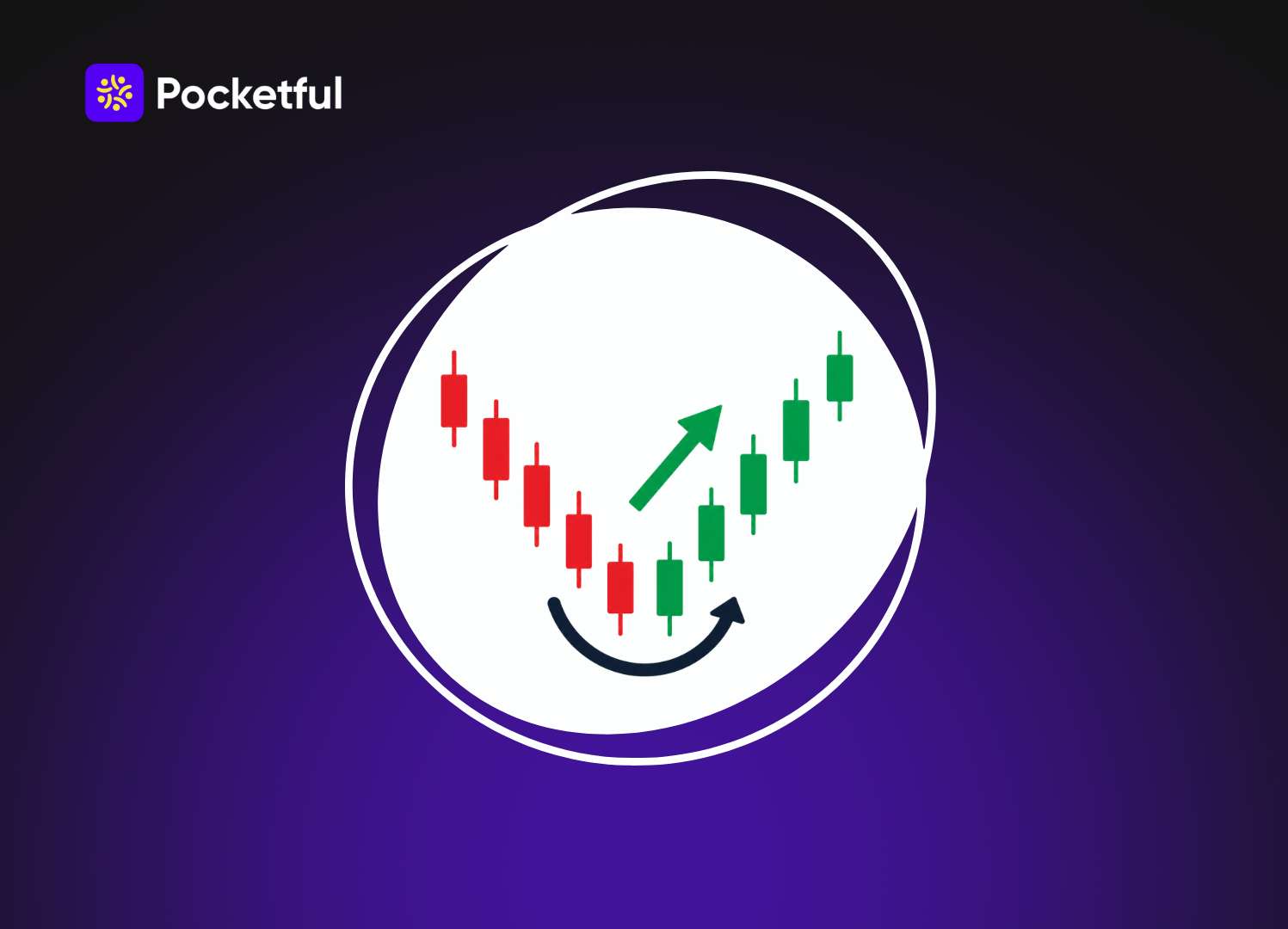
One of the most challenging aspects of trading is identifying a trend reversal at the right moment. Sometimes, the price merely pauses briefly, whereas at other times, the entire trend shifts. In such scenarios, an understanding of reversal trading can help you secure better entry and exit points. A successful reversal trade is not based on guesswork but on price action, volume, and confirmation signals. In this article, we will explore what reversal trading is, how to identify it, and the methods used to make more reliable trading decisions.
What is Reversal Trading?
Reversal trading is a strategy where traders attempt to identify when an existing trend is coming to an end and the price is likely to move in a new direction. Simply put, a trade executed to capitalize on the shift in a stock’s sustained upward or downward trend is known as a reversal trade. However, experienced traders prefer to enter a trade only after the trend reversal has been confirmed, rather than acting merely on a signal that the trend might be changing.
Example: Suppose a stock’s price rises from ₹800 to ₹1,000. If the price subsequently begins to consistently close below a key support level accompanied by rising volume, it could signal that the uptrend is ending and a downtrend might be starting. In such a scenario, once confirmed, traders can execute trades based on a reversal trading strategy.
How Does a Reversal Trade Work?
To execute a reversal trade correctly, one should not merely anticipate a trend change but wait for it to be confirmed.
- Identify the current trend: First, determine whether the stock is in an uptrend or a downtrend. This helps in understanding the likely direction of a potential reversal.
- Look for reversal signals: Identify potential trend changes using price action, key support or resistance levels, and trend reversal patterns.
- Buy on a bullish reversal: If a declining stock begins to rise with confirmation, many traders enter a ‘Buy’ position.
- Sell on a bearish reversal: If a rising stock begins to fall with confirmation, many traders consider a ‘Sell’ or ‘Short’ position.
- Set Stop Loss and Target: Place a Stop Loss when entering the trade and exit based on a pre-determined target or risk-reward ratio.
Pullback vs Reversal – Know the Difference
Pullbacks and reversals might look similar, but they mean different things.
| Base | Pullback | Reversal |
|---|---|---|
| Meaning | A temporary decline or surge occurring within a trend. | A complete shift in the current trend |
| Impact on the trend | There is a likelihood that the old trend will continue. | The likelihood of a new trend starting increases. |
| Duration | Usually for a short time | It can often last for a long time. |
| Purpose of the entry | Re-entering a trade in the direction of the prevailing trend | Taking a trade at the start of a new trend |
| Confirmation | Strong affirmation is not always necessary. | Confirmation from price, volume, or other indicators is essential. |
| Risk | Comparatively less | The risk can be high in the event of mistaken identity. |
Why is Reversal Trading Important?
A solid understanding of reversal trading helps traders make better decisions as market trends shift. This is why many experienced traders employ this strategy.
- Opportunity to catch the start of a new trend: Identifying a trend reversal early on creates an opportunity to enter the market at the beginning of a new trend.
- Better Risk-Reward Ratio: A reversal trade executed after proper confirmation often offers the potential for higher returns with lower risk.Helps avoid poor entry decisions: Recognizing reversal signals reduces the likelihood of making the mistake of entering trades in a rising or falling market without sufficient justification.
- Useful across various markets: Reversal trading is applicable in diverse financial markets, including stocks, indices, commodities, forex, and cryptocurrency.
- Improved trading decisions: When traders base their decisions on price action and confirmation, it becomes easier to trade based on data rather than emotions.
Read Also: Double Top Reversal Chart Pattern
Common Signs of a Trend Reversal
Spotting when a trend is losing steam usually tells you a shift is coming. Just don’t jump into a reversal trade based on just one single clue.
- Price Structure Changes: The first real sign of reversal trading kicking in is when a stock simply stops hitting new highs or lows.
- Broken Support or Resistance: When price smashes through strong support or resistance lines, trend reversal stocks usually shoot off in a brand new direction.
- Volume Spikes: If a ton of buying or selling volume suddenly shows up during a shift, the move becomes way more believable.
- Spotting Chart Shapes: Classic setups like a Double Top or Head and Shoulders are clear signs that trend reversal patterns are forming.
- Tool Confirmation: Timing your entry gets a lot safer when a technical trend reversal indicator like RSI or MACD actually backs up the move.
Most Popular Trend Reversal Patterns
- Double Bottom: This pattern shows up when a stock drops to the exact same low twice but refuses to go any lower, bouncing back instead. It means sellers are tired and buyers are taking over. For traders, this is a clear cue that the price is likely heading upward.
- Double Top: A Double Top forms when the price retreats twice from approximately the same resistance level. This suggests that upward buying pressure is diminishing and the market may turn downwards.
- Head and Shoulders: This is one of the most widely used trend reversal patterns. Its structure, resembling three peaks, indicates that bullish momentum is fading. Many traders view a break of the neckline as a sell signal.
- Inverse Head and Shoulders: You see this pattern after a stock has been falling for a while. The price basically stops dropping and starts recovering. Once it clears that neckline resistance, it is a clear sign things are turning bullish.
- Rising Wedge: In this pattern, the price keeps heading up but it is losing speed fast. If the bottom support line cracks, it shows the stock is weak and the price will likely start dropping.
- Falling Wedge: In a Falling Wedge, the price moves downward within a narrowing range. Once the upper trendline is broken, buying activity may increase; consequently, many traders regard this as a signal for a bullish reversal.
- Rounding Bottom: In this pattern, the price turns from a low point to a high point gradually rather than abruptly. This indicates a resurgence of buying interest in the market and suggests that a long-term uptrend could be starting.
Best Trend Reversal Indicator Used by Traders
No single indicator provides a correct signal every time. That is why experienced traders often use only one or two indicators alongside price action.
| Trend Reversal Indicator | What does it indicate? | When is it useful? |
|---|---|---|
| RSI (Relative Strength Index) | Whether the stock is in the overbought or oversold zone. | To identify the early possibility of a potential trend reversal. |
| MACD | It shows a change in the direction of momentum and the trend. | To obtain bullish or bearish confirmation. |
| Moving Average Crossover | The crossing of two moving averages signals a change in the trend. | To confirm a new uptrend or downtrend. |
| Bollinger Bands | It shows whether the price is moving outside the normal range. | To look for a potential reversal after a sharp move. |
| Stochastic Oscillator | It measures the strength of buying and selling. | It helps identify reversals from overbought and oversold zones. |
| Supertrend | It shows the direction of the current trend and potential changes. | It is considered useful for following trends and determining entry and exit points. |
Step-by-Step Reversal Trading Strategy
Executing a successful reversal trade requires following the right sequence rather than rushing in.
- Select stocks with strong trends: Focus on stocks where the price has been moving in a single direction for a significant period. Identifying a reversal on such charts is easier.
- Analyze the chart carefully: Instead of rushing to enter, first understand the price levels where the price is stalling and what the market behavior indicates.
- Allow the reversal to form: Wait until the market itself shows signs of changing direction. Often, a little patience leads to a better entry point.
- Verify the signal: Proceed only if the trend reversal indicator and price movement align and point in the same direction.
- Enter with a trading plan: Determine your target and stop-loss before entering the trade. A reversal trade executed without a plan often increases risk.
- Manage the trade: Do not alter your decision based on every minor price fluctuation after entering the trade. Manage your position according to your pre-determined strategy.
- Exit at the right time: Book profits once the target is reached. If the market moves against your expectations, adhere to your stop-loss.
Enhance Your Reversal Trading with Pocketful
If you engage in reversal trading, Pocketful could be an excellent choice for you. It offers advanced charts, AI-driven tools, rapid order execution, and various smart trading features that simplify the analysis of stocks poised for a trend reversal. Additionally, the platform facilitates better trading decisions through the use of various trend reversal indicators and other technical tools.
Read Also: Reverse Cash and Carry Arbitrage Explained
Conclusion
Success in reversal trading depends not only on entering a trade at the right time but also on patience and accurate analysis. By correctly utilizing trend reversal patterns and indicators, you can make better trading decisions. Always execute a reversal trade only after receiving confirmation and make risk management an integral part of your strategy.
Frequently Asked Questions (FAQs)
01
What is reversal trading?
Reversal trading is a strategy that attempts to take a trade after a trend change.
02
What is the difference between a pullback and a reversal?
A pullback is a temporary price movement, while a reversal changes the direction of the trend.
03
Which is the best trend reversal indicator?
RSI, MACD, and Supertrend are the most commonly used trend reversal indicators.
04
What are the most reliable trend reversal patterns?
Double Top, Double Bottom, Head and Shoulders, and Inverse Head and Shoulders are considered reliable patterns.
05
How can I identify trend reversal stocks?
Trend reversal stocks can be identified using price action, volume, support-resistance, and technical signals.
Disclaimer

The information shared in this content is intended solely for educational and informational purposes and should not be considered financial, investment, or trading advice. Any references to stocks, mutual funds, or market instruments are purely for informational purposes and do not constitute recommendations. Investments in financial markets are subject to market risks, and past performance is not indicative of future returns. Readers are advised to conduct independent research, review official documents carefully, and consult a qualified financial advisor before making any investment or trading decisions.
Article History
