



| Type | Description | Contributor | Date |
|---|---|---|---|
 | Post created | Pocketful Team | May-25-26 |
Read Next
- What is Tender Period in MCX?
- Top 10 Biggest Stock Market Crashes in India
- What is Reversal Trading?
- What Is an OCO Order?
- Bankex vs Sensex: Key Differences
- How to Earn Money in Share Market?
- Difference Between Sensex and Nifty
- What Is a Brokerage Account?
- Best Stop Loss Strategies for Day Trading in 2026
- Best ETF Trading Strategies in India
- What is Overnight Trading?
- Why Option Buyers Lose Money in Trading
- Formulas used to Calculate Profit and Loss in Nifty Options
- How to Trade Fake Breakouts Using Options: 5 False Breakout Strategies
- Trade Breakouts with Options Without Overpaying IV
- How to Use MTF in the Stock Market?
- Understanding Bull Put Spread Option Strategy
- NSE Extends F&O Trading Hours by 10 Minutes
- Expiry Day Trading Explained
- Delta Neutral Trading Strategy: What it is & How it works
High Premium Selling: Risk vs Reward Explained
Published on : 28th May 2026
|Updated on : 27th May 2026



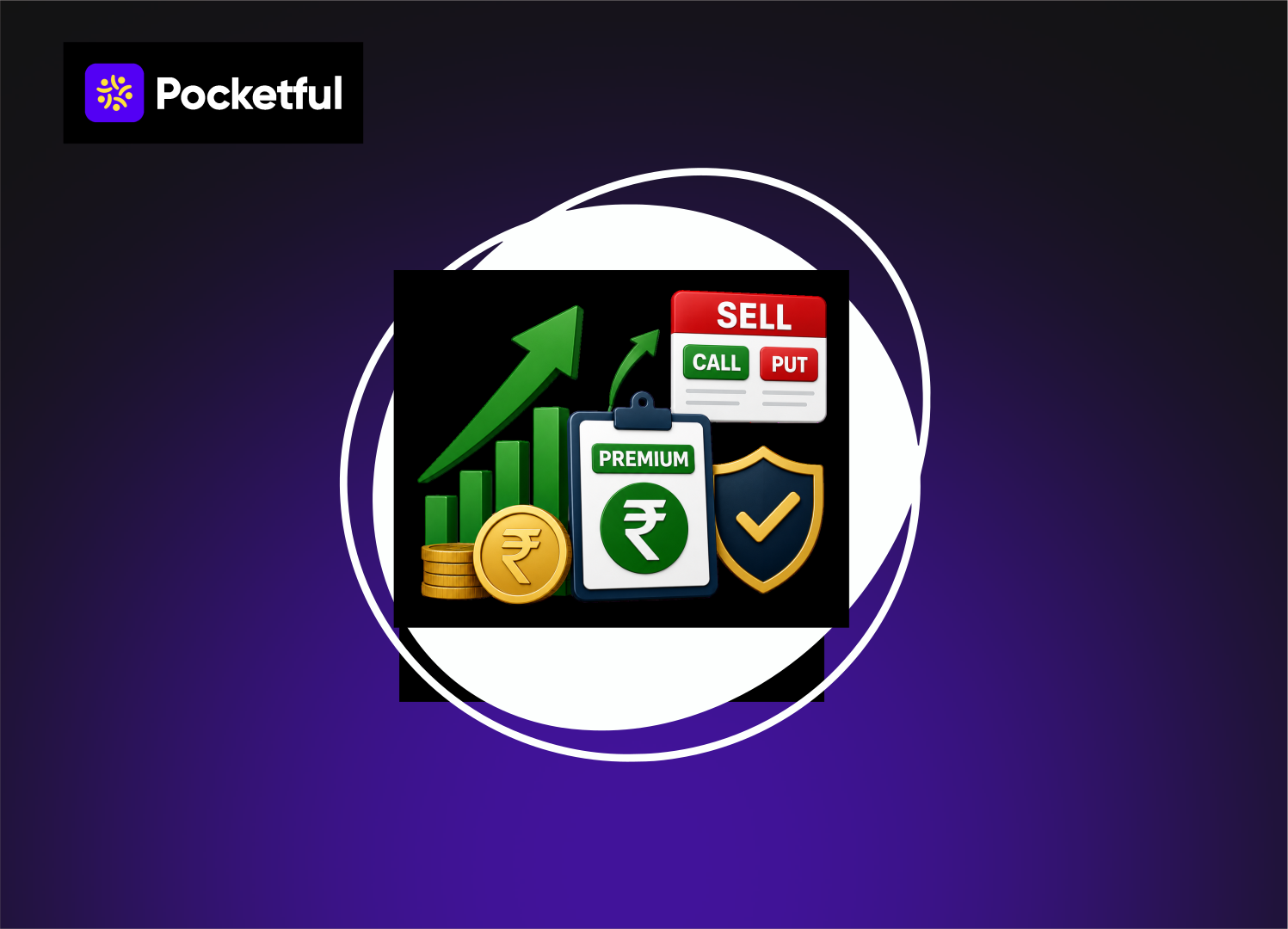
If you track Nifty or Bank Nifty, you might have seen days when option prices look very expensive. On these days, sellers feel excited. They think that selling a high premium means making a big, easy profit. But there is a common myth in the market: “Higher premium equals higher profit.” In reality, a high premium is not free money. It is the market’s way of saying there is a big risk ahead. Professional traders know that a high premium is just a reward for taking on extra danger.
Understanding Option Premium
In simple terms options premium is the price a buyer pays to the seller for entering a contract. The premium is the direct income a seller earns – though real profits also account for taxes, brokerage, and margin costs.
The premium has two main parts:
- Intrinsic Value : This is the real or the actual value of the option at that time. Suppose if Nifty is at 22,100 then a 22,000 call option has 100 points of the real value in it. This is only in the “In-the-money” options.
- Extrinsic Value : This is the amount that is paid extra by buyers to pay according to how much time is left and how much the market might move. This part of the price disappears as we get closer to expiry.
In the Indian market, sellers love “Theta decay.” This is when the extrinsic value of the option drops every day, giving the seller a profit.
What is High Premium Selling?
High premium selling means selling options when their prices are much higher than normal. In India, we usually see this when the “India VIX” (the fear index) goes up.
When do these premiums become “high”?
- High Implied Volatility (IV): This generally takes place when there is a feeling that the market will show massive movements.
- Market Uncertainty: Premiums even spike when there is some global uncertainty or some bad news is there in the market resulting in sudden crash.
- Major Events: Premiums even become very expensive on certain days when some major event is going to take place like the Union budget, general elections or policy changes announced by the RBI.
Why Do High Premiums Exist?
There is a direct link of high risk with high prices as high risk leads to high prices.
- Function of Implied Volatility (IV): When IV is high, it means the market is nervous. It expects Nifty or Bank Nifty to jump or slide by hundreds of points. As the risk of these big moves are high, sellers demand more money for taking the risk. Altogether the premium rises with the rising danger.
- Market Expectations: The market moves because of fear and greed. Before any big news or event like budget the fear is generally high. Institutions price options by looking at how much the index could move. If there is a possibility that the nifty could move around 5% in a day then it is made sure that the premiums are high enough to cover the move.
Risk vs Reward of High Premium Option Selling
Selling premiums at high can act like a double-edged sword. Let’s look at both sides.
The Reward Side: Why Traders Love It
- Higher Upfront Income: You collect more cash in your account as soon as you sell the option.
- IV Crush (Faster Profits): Once a big event like an election is over, the fear disappears. This is called an “IV Crush.” The premium drops very fast, and you can book a profit in minutes.
- Better ROI: Because you collect a fat premium, the market has to move much further before you start losing money.
The Risk Side: What Beginners Often Forget
- Huge Price Swings: In a volatile market, Nifty can gap up or down by 200 or 300 points. This can cause massive losses overnight.
- MTM (Mark-to-Market) Losses: Even if you are right in the end, the price might swing wildly against you in the middle of the day which can be really stressful sometimes.
- Stop-Loss Issues: In a highly fluctuating market sometimes the stop loss might not be activated at the right time and price. This can result in huge losses than you have analysed.
- Premium Can Still Rise: Your premium cost can rise anytime it is not fixed for the whole duration. If the situation is very volatile then you can even incur huge losses.
Read Also: Option Buying vs Option Selling: Key Differences
Comparing High Premium vs Normal Premium Selling
| Factor | Normal Premium Selling | High Premium Selling |
|---|---|---|
| Market Mood | Calm and Quiet | Fearful and nervous |
| VIX Level | Low | High |
| Main Profit Source | Daily time decay | Sudden drop in IV (IV crush) |
| Risk Level | Predictable | Highly unpredictable |
| Best time to trade | Regular weeks | Events (budget, results) |
ITM vs ATM Selling: A Practical Perspective
During a situation when the premium is high you should know what to choose.
- Selling ITM (In-the-Money): These give you the most money upfront, but they are very risky. They move almost exactly like the index. If the market moves against you, you will lose money very fast.
- Selling ATM (At-the-Money): Most professionals prefer this. These options have the most “hope value” (extrinsic value). If the market stays flat or the IV drops, these options lose value the fastest, giving you a quick profit.
The Hidden Risks of High Premium Selling
Don’t let the big numbers fool you. There are some traps you should know about.
- Unlimited Loss Potential: When you sell options, your profit is limited to the premium, but your loss can be huge if the market crashes or rallies like crazy.
- Volatility Expansion: Sometimes, you sell a “high” premium, but the market gets even more scared. If the VIX keeps rising, the premium you sold will become even more expensive, showing you a loss.
- Event Risk and Gaps: If a big news event happens at night, the Indian market might open with a massive gap the next morning. You won’t have time to exit your trade.
- Margin Pressure: When the market gets volatile, the exchange often asks for more margin money. If you don’t have extra cash, your broker might close your trade at a bad price.
When High Premium Selling Makes Sense
You can use high premiums to your advantage if you have a plan.
- After the Big Move: The best time is often right after the volatility has peaked. Volatility usually goes back to its average level after a spike.
- Range-Bound Markets: If you think the Nifty will stay within a certain range despite the news, selling high premiums far away from the current price can be a good move.
- Use Hedged Strategies: Instead of selling naked or uncovered options, use a spread.
- Spreads: Buy a cheaper option as insurance while selling an expensive one.
- Iron Condor: A four-legged strategy – you sell and buy a call spread, and sell and buy a put spread, capping your maximum loss on both sides. It limits your risk and lets you profit if the market stays in a wide range.
Read Also: Best Option Selling Strategy in India
Conclusion
High premium selling can be a great way to earn, but you must respect the market. The high price is there for a reason. Always use a stop-loss, keep your trade sizes small, and consider using hedges like spreads to stay safe.
Create and implement option strategies in live markets with advanced charts, powerful option chain, and Scalper Mode for fast trade executions – download Pocketful today.
Frequently Asked Questions (FAQs)
01
Is selling high premiums always better than selling low ones?
No. While you get more money upfront, the risk of the market moving against you is also much higher. High premiums are a sign of high risk.
02
What is an IV Crush?
An IV Crush happens when market uncertainty suddenly goes away, such as right after the Budget speech or an election result. This makes option prices fall very quickly, which is great for sellers.
03
Do I need a lot of money to sell options?
Yes, selling options requires “margin” money as a safety deposit. This is much more than the small amount needed to buy options.
04
Can my loss be more than the premium I collected?
Yes. If the market makes a very large move, your loss can be much higher than the initial premium you received. This is why risk management is vital.
05
Which strategy is safest for a beginner?
Hedged strategies like the Iron Condor or a Bull Put Spread are safer. They cap your maximum loss so that one bad trade doesn’t wipe out your account.
Disclaimer

The information shared in this content is intended solely for educational and informational purposes and should not be considered financial, investment, or trading advice. Any references to stocks, mutual funds, or market instruments are purely for informational purposes and do not constitute recommendations. Investments in financial markets are subject to market risks, and past performance is not indicative of future returns. Readers are advised to conduct independent research, review official documents carefully, and consult a qualified financial advisor before making any investment or trading decisions.
Article History
