



| Type | Description | Contributor | Date |
|---|---|---|---|
 | Post created | Pocketful Team | Jul-14-26 |
Read Next
- Top 10 Biggest Stock Market Crashes in India
- What is Reversal Trading?
- What Is an OCO Order?
- Bankex vs Sensex: Key Differences
- How to Earn Money in Share Market?
- Difference Between Sensex and Nifty
- What Is a Brokerage Account?
- Best Stop Loss Strategies for Day Trading in 2026
- Best ETF Trading Strategies in India
- What is Overnight Trading?
- Why Option Buyers Lose Money in Trading
- Formulas used to Calculate Profit and Loss in Nifty Options
- How to Trade Fake Breakouts Using Options: 5 False Breakout Strategies
- Trade Breakouts with Options Without Overpaying IV
- How to Use MTF in the Stock Market?
- Understanding Bull Put Spread Option Strategy
- NSE Extends F&O Trading Hours by 10 Minutes
- Expiry Day Trading Explained
- High Premium Selling: Risk vs Reward Explained
- Delta Neutral Trading Strategy: What it is & How it works
What is Tender Period in MCX?
Published on : 14th July 2026
|Updated on : 14th July 2026



Many individuals enter the financial markets with hopes of making good profits. They buy and sell assets daily on their computer screens. Often, they do not think about the actual physical goods behind these digital trades.
It is a surprising reality that a delivery truck could arrive at a house to drop off heavy metal blocks. This situation is a real possibility in certain commodity markets if a digital trade is left open. If an electronic trade is not closed on time, the trader might be forced to accept actual delivery of physical items.
Thankfully, there is a specific safety rule that prevents this unexpected surprise. The following sections will explain this important rule in simple terms.
What is Tender Period in Commodity Trading?
When people trade commodities on the Multi Commodity Exchange, they deal with contracts representing actual goods. These contracts always have a fixed end date. This final day is called the expiry date.
Some of these contracts are cash settled. This means traders only pay or receive the price difference in cash. However, many popular contracts like gold and silver are physically settled. For these, actual physical goods must be transferred when the contract ends.
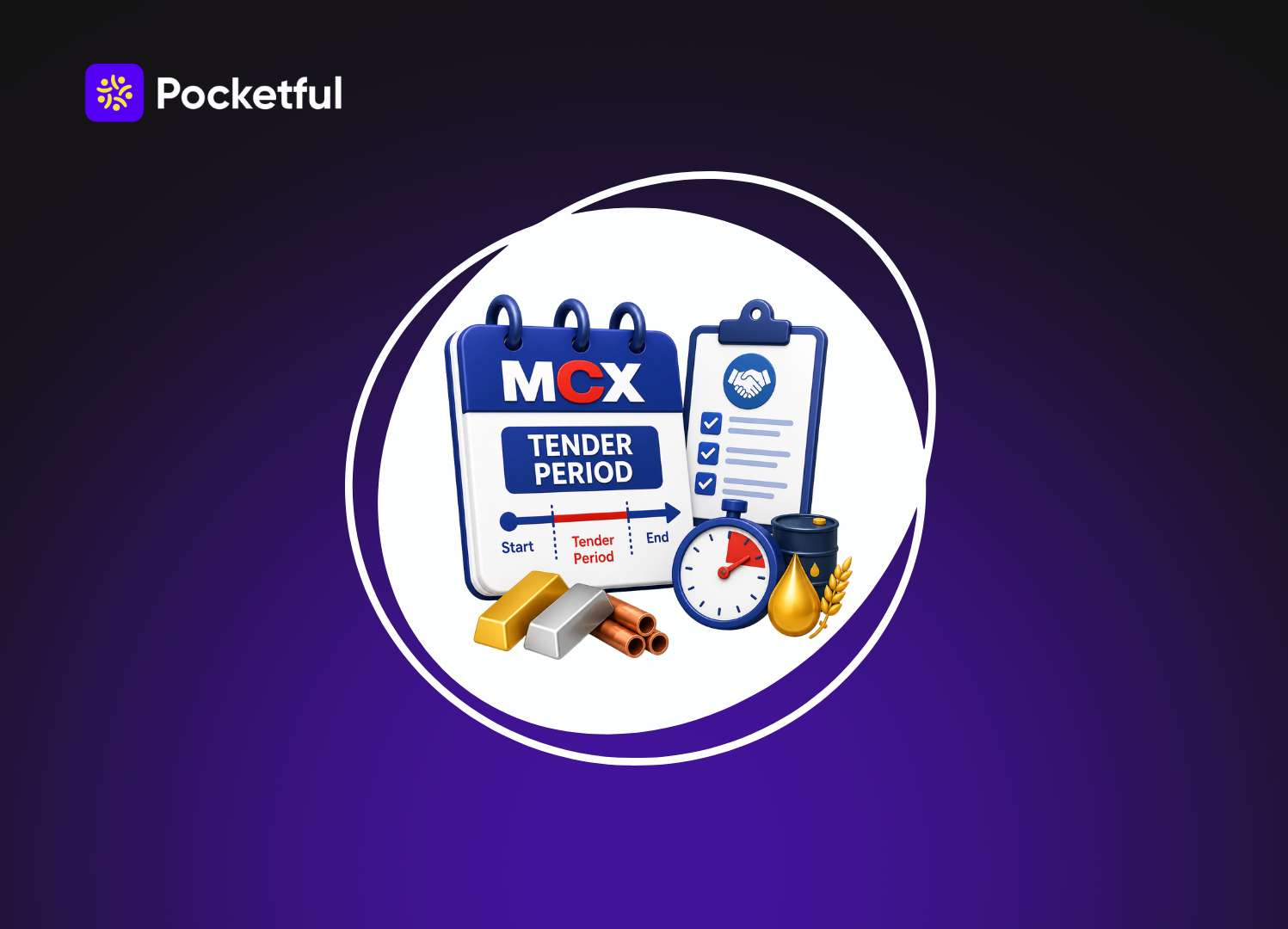
So, exactly What is Tender Period in MCX? By Meaning, it is a specific window of a few days just before a futures contract expires. During this time, buyers and sellers must formally declare if they want to give or take physical delivery of the real goods.
The Benefits of this timeframe are quite clear for all market participants. It gives retail traders enough time to close their open positions safely before the delivery process begins. It also helps the exchange prepare for the physical transfer of commodities from the seller to the buyer.
Regarding How to Use this period, traders simply need to close their electronic trades before the window starts. Doing so ensures they avoid taking actual delivery of heavy metals or other physical goods. Modern platforms like Pocketful often help traders by squaring off positions before this window begins.
Rules of Tender Period in MCX
To keep commodity trading safe and smooth, the exchange has set clear rules for this period. These guidelines ensure that physical deliveries happen without any confusion. Here are the main rules in simple terms:
- Staggered Timeline: This period does not happen on a single day. It is spread across multiple days to give traders enough time to act. For most contracts, including base metals and standard commodities like gold, it begins three working days before the contract expires.
- Declaration of Intent: Sellers are allowed to notify the exchange about their plans to physically deliver the goods anytime during these three days. They do not have to wait until the final day to show their intention.
- Random Matching Process: If a buyer keeps a long position open during this time, the exchange randomly matches them with a seller. Once matched, the buyer cannot refuse to take delivery of the physical goods.
- Margin Hikes: The exchange charges an additional margin during these final days to discourage late trading. This extra charge increases by five percent every day to cover the risk of sharp price moves.
- Obligation for Short Sellers: Short sellers who do not already own the physical commodity must buy it from the market. They are legally obligated to deliver it upon expiry if they do not close their position.
- Broker Actions: Most retail brokers do not support physical delivery services. Therefore, brokers will automatically close open positions before this critical window begins to protect the trader.
Read Also: What is MCX Trading
Tender Period vs Expiry Date in MCX future
Many beginners get confused between these two market terms. Even though they are related, they serve completely different purposes in commodity trading. The table below highlights the main differences between the two concepts.
| Feature | Tender Period | Expiry Date |
|---|---|---|
| Basic Definition | A window of a few days to declare physical delivery plans. | The absolute last day of the futures contract. |
| Start Time | Typically starts three working days before the contract ends. | It is the final calendar day of the contract cycle. |
| Trading Status | Trading is allowed but margin requirements are much higher. | No new trading is allowed after the final cut off time. |
| Primary Purpose | To allow sellers to declare their intent to deliver the commodity. | To finally settle all remaining open positions. |
| Margin Limits | Extra pre-expiry margins of up to five percent daily are applied. | Normal margin rules stop and full contract value may be required. |
| Broker Action | Brokers will usually square off trades right before this starts. | All remaining unresolved trades go into the delivery or default process. |
Importance of Tender Period for traders
Why should a regular trader care about this specific timeframe? It plays a highly important role in the overall trading journey for several reasons. Understanding this concept can save traders from severe financial stress.
- it helps traders avoid heavy financial penalties. If a trader holds a contract into these final days without enough funds in their account, the position will face a margin shortfall. Exchanges increase margins heavily to discourage speculation near the end date.If the account lacks funds, the broker will forcefully liquidate the position. The trader might also face huge penalty charges. Therefore, knowing the timeline is crucial for protecting capital.
- It keeps traders safe from unwanted physical delivery. Most retail market participants only want to profit from price movements. They do not want to manage warehouses, transport logistics, and safety insurance for real metals. Knowing exactly when this timeline starts helps traders exit the market on time.
- it helps in better capital planning. Since margin requirements go up significantly during these days, traders need to monitor their account balances very closely.
Tender Period in Future : Example
This concept can be understood with a simple real world example. This will make the exchange rules much clearer to grasp.
For instance, consider a scenario where a trader is dealing in Gold Mini futures on the exchange. The gold contract is scheduled to expire on August 5. Because gold is a physically settled commodity, the special delivery window will start three working days before the expiry.
Therefore, the window will begin on August 2. An examination of two different scenarios shows how this impacts the trader.
Scenario A: Trading on a retail platform
The trader bought one lot of Gold Mini futures on Pocketful. As August 2 approaches, the platform knows that entering this timeline carries massive physical delivery risks. To protect the user, Platform will notify the trader to close the trade.
If the trade is not closed by the trader, the risk management team will automatically square off the position. This usually happens before the market closes on August 1. The trader safely books the profits or losses without ever worrying about actual gold delivery.
Scenario B: Trading with physical delivery
The trader keeps the long position open on August 2 on a different platform. Since the market is now in the delivery window, the exchange might match the trader with a seller who wants to deliver gold. Once matched, the trader is legally bound to take physical delivery of the gold.
The trader will have to pay the full actual value of the gold contract. They must also arrange a secure vehicle and store the physical gold in an approved exchange vault. This is a very complex and expensive process for a regular person.
Risk and Considerations of Tender Period
Trading near the contract end date comes with serious risks. Traders must always keep these critical points in mind before holding positions for too long.
- High Storage Costs: Taking physical delivery means the buyer must pay for warehouse storage. They must also pay for safe transport and heavy insurance. These extra costs can easily wipe out any trading profits made on the screen.
- Unwanted Delivery for Short Sellers: If a trader sells a contract short and forgets to close it, they are in trouble. They must buy actual physical goods of the correct purity to deliver to the exchange. Sourcing high purity gold or industrial metals in a few days is extremely difficult for a normal person. Furthermore, the goods must meet the strict quality standards set by the exchange. Failing to deliver the exact quality results in massive penalties. This is an unnecessary risk for retail participants.
- Margin Penalty Risks: As the expiry comes closer, the exchange demands more margin money. If a broker does not automatically close the trade, the trader must bring in more cash. Failing to maintain this high margin leads to forced liquidation at very bad market prices.
- Lack of Broker Support: Most retail trading platforms in India do not have the setup to support physical delivery. Traders should always check their broker policies. Using a reliable platform ensures that these risks are handled safely through automated risk management systems.
Read Also: MCX Exchange Case Study
Conclusion
In conclusion, this specific delivery window is a highly important risk management tool in commodity markets. It acts as a clear bridge between electronic trading and real world physical delivery. For physical businesses, it provides a highly structured and safe way to trade actual goods.
For retail traders, it serves as a strict final warning to close positions and avoid heavy physical delivery costs. Understanding these market rules makes a person a much smarter investor. It prevents unexpected surprises and keeps trading capital safe. Start trading in commodities with pocketful provides Advance charting tools , option chain & many more.
Frequently Asked Questions (FAQs)
01
What does the tender period mean in MCX?
It is a timeframe of a few days before a commodity contract expires. During this time, traders formally declare their physical delivery intentions.
02
When does this tender period timeframe start?
For most commodities like gold and base metals, it begins three working days before the contract expiry date.
03
Can trading happen during these days?
Yes, trading continues on the exchange. However, exchanges apply heavy additional pre expiry margins to discourage speculation.
04
What are the main benefits of the tender period?
It allows businesses to plan physical logistics properly. It also protects retail traders by giving a clear deadline to exit trades.
05
How to use it safely?
Retail traders should use this as a strict deadline. Squaring off open positions before this window avoids forced physical deliveries and high margin penalties.
Disclaimer

The information shared in this content is intended solely for educational and informational purposes and should not be considered financial, investment, or trading advice. Any references to stocks, mutual funds, or market instruments are purely for informational purposes and do not constitute recommendations. Investments in financial markets are subject to market risks, and past performance is not indicative of future returns. Readers are advised to conduct independent research, review official documents carefully, and consult a qualified financial advisor before making any investment or trading decisions.
Article History
